Google+

Saturday, February 11, 2012

In defense of print books

I defended ebooks. Now I'll defend what probably doesn't need much defending...yet. Regardless, I'm going to whip out my list of complaints and rant like Andy Rooney calling IT support.

1. Value


When you buy a print book, you buy a thing that actually exists. It has value. Without electricity, it is still there. In the motion picture 2012 starring John Cusack, when the world ended there was apparently only one book left or something, and it was a print book. And it was written by John Cusack.

Print books are covered by the right of first sale. Once you buy it, you can do anything you want with it (other than copy it and distribute those copies). You can give it away. You can sell it for $1. You can sell it for $1,000,000. You can wear it as a hat. You can tear out its pages and line a litter box. You can buy it for a public library and an unlimited number of people can check it out and read it. Unless they read it with cheeto fingers, and then you have to buy a replacement copy. But you can buy that copy used, thanks to the right of first sale.

That giant book you see above is a copy of Audubon's Birds of America, and it's one of the most expensive books in the world. In 2000 it sold for $11.5 million.

2. Bookstores

There's no crying in baseball, and there are no ebooks in bookstores.

Once upon a time there existed places where you could browse for real life things, and then buy them in real life. CUH-RAZY I know. Sure the clerks were a bit snooty; particularly when you bought anything where the author's name was in larger font than the title. But then you climbed up one of those rolling ladders, glided along like Belle (holding back the urge to burst into song), and found a rare hardback copy of The Mouse and His Child that you loved as a kid, and you squeal a little bit (and not because it's about mice).


My favorite bookstore, Ram's Head Books, is closing. After 48 years. Now there are zero independent bookstores selling new books within 50 miles of Roanoke. They had an incredible collection, and I never, not once, went inside without buying something. Sorry if I'm a bit sore over it.

A few ideas on how this can stop happening:

Indie bookstores can survive. But they'll have to change tactics. Practically every book that has ever been printed is available for purchase online. And chances are it's cheap. If you try to stock every title imaginable, you will fail. If you stock only bestsellers, you will fail. If a reader knows what they want, they can (and will) buy it online, or at Barnes and Noble. Instead, stock what they didn't know they wanted. Make walking into your store an experience of awe and surprise. Only stock the good stuff. Stock good authors -- people you've read. You know that "other customers bought" thing on Amazon? Emulate that. Also, it couldn't hurt to just make sure your store is attractive. Take some pointers from the 20 most beautiful bookstores in the world.

Bookstores aren't libraries and they shouldn't try to be. Book spines aren't interesting -- book covers are everything. Your customers are there to buy a physical object; so give them one! Buy gorgeous books: hardcovers with thick paper and slipcases. Autographed rare prints that weigh 20lbs. Coffee table books about coffee tables.


Take my most recent print book purchase, Matt Kish's Moby-Dick in Pictures. It's absolutely gorgeous. A book to own, no doubt. 552 original illustrations for all 552 pages of Moby Dick. You could buy it as an ebook. But I'm not sure why you would. Seems kind of greedy. This is a book you want to share with people. You want people to come in to your apartment, see it, and exclaim "wow, that is such a cool idea!" and then spend the next 45 minutes leafing through it. Then you're both late to go see The Descendants, but that's okay, because it turned out to be overrated anyway.


3. vintage is a thing right

analog is totally making a comeback. we can be hipster together and listen to some LPs while reading kerouac in paperback. i'll take some polaroids and we can pay for things at urban outfitters with pennies. this was purposely written in helvetica.


4. Turn on a dime

Now I'm going to pretend like I know what the hell I'm talking about.

Lets talk about ebook publishers and distributors. When they sell you an ebook, is it really yours? How easy would it be for them to take it back? Or decide not to sell it to you in the first place?

Back in 2008, Amazon ruffled some feathers when they deleted copies of Orwell's 1984  and Animal Farm from customers' Kindles. Of all the books to delete. The copies were illegal because they were sold from an unauthorized publisher. So it wasn't some sort of Orwellian censorship of....Orwell. But what bothered people was the realization that Amazon could (and would) take away things you thought you owned. And they didn't have to break into your house to do it.

In Fahrenheit 451, teams of firemen had to locate, invade, and incinerate entire houses filled with illegal books. In the age of ebooks, it takes one button. Imagine George Jetson sitting at his job, pushing one button over and over. His finger slips, he hits the wrong button. Poof, the entire canon of Western literature is erased. George Jetson shrugs and goes for a jog on his outdoor treadmill.

And the money? Publishing is a business after all. The dime is the bottom line. And what's a better way of making money than selling someone a book they don't have to pay to print, the customer has to buy an expensive device in order to read (which constantly outdates itself and has to be replaced, and oh looka there, is manufactured by the same distributor who sold the book), isn't covered by first sale, can't be shared, sold, or transferred, and after all that, still charge the same price for it as a print book?

That's not a dime. That's a billion dollars.

But a billion isn't nearly enough, says Penguin, who recently withdrew their titles from Overdrive, a popular ebook platform for public libraries. Why? Because they're afraid it would ultimately affect their sales. Access to ebooks, they claim, is too easy for patrons. They're actually reading the literature we publish! For free! The horror! What is this, a publicly sponsored program to promote literacy, education, and information regardless of an individual's background or income? Sounds like socialism to me. We'll take our ebooks over here, thank you very much.

Funny thing about print books -- you can't pick and choose who you sell them to.Or suddenly change your mind and take them back.

My issue with ebooks is entirely over the ownership thing. You won't find me over in the corner stroking paperbacks and mumbling conspiracy theories about the FBI on the internet or anything. What I'm saying is when you buy an ebook you end up paying for the experience of reading it. Which is totally fine and wonderful and I do it too. But that experience, and not the ownership, should determine the pricing.

When I pay for the experience of seeing a movie in the theater, my $10 is paying every single person listed in the credits. Take, for example, The Lord of the Rings: Return of the King. 1,895 people listed in the credits. That's a half penny per person when I get my ticket. Really it's less since part of it goes to the theater. A fraction of a penny! Those greedy bastards. Next time I hear someone complain about expensive movie tickets I'm going to punch them in the wiener. Then when the movie is released on DVD, the price is higher. Because you're paying to permanently own that movie. On a thing that exists.

When you're paying for an experience, and not an item, the price should be reflected accordingly. Support the publisher and the asshole who wrote the book. But we shouldn't be paying for a printing press, shipping costs, and a bookstore front, when there aren't any. As of now, the prices haven't evened out, and publishers are making a killing off of selling thin air.


This has been a fairly grumpy defense, and I apologize. I promise I'm not a mad mountain woman living next to a Walden-esque pond, yelling at trees and debating with squirrels. I'll end on a light-hearted point.

If print books disappear, how will we make animated videos of books coming alive at night?


See also:
(From 1946 and 1938. So yeah, be prepared for profound racism.)


What would Sebastian steal from the store?


WHAT WOULD THE PAGEMASTER BE THE MASTER OF?


Possibly diet pills. Someone send Macaulay Culkin a pizza. Just make sure it's plain cheese.

Thursday, February 9, 2012

Internet Lovelies

There's a librarian themed Ryan Gosling tumblr.

Through the long span of reading it and not reading it, just looking at it, or carrying it around, I kept thinking about art. It’s power, its lack of power, what it does to the hypercultured; I’d call most readers of this blog hypercultured. Does it blunt us to the real trauma around us? To the relationships and forms that are actually unavoidable? I wouldn’t be surprised. I do know that art really can “humanize” someone, in that it can make them really aware of other minds and ways of life, painfully & acutely aware, for the first time. It’s becoming harder to fight off the idea that art is best as a benign storehouse for excess energy, for ideas or behaviors that would normally be considered weird or offensive, and that, at its best and most beautiful, is contagious and hooks people into its practice and community, in order to grow itself as a form of human activity; but why fight this? In other words, art as/is the least harmful cultural node.
Ken Baumann on reading 2666, Link

Least harmful? Possibly. But there is this Flavorwire list of the most dangerous novels of all time.
The deep foundation of the US – so went my thinking – was not the comparatively recent 18th-century Enlightenment structures of the republic, with their talk of equality and their separation of church and state, but the heavy-handed theocracy of 17th-century Puritan New England, with its marked bias against women, which would need only the opportunity of a period of social chaos to reassert itself.
...

I made a rule for myself: I would not include anything that human beings had not already done in some other place or time, or for which the technology did not already exist. I did not wish to be accused of dark, twisted inventions, or of misrepresenting the human potential for deplorable behaviour. The group-activated hangings, the tearing apart of human beings, the clothing specific to castes and classes, the forced childbearing and the appropriation of the results, the children stolen by regimes and placed for upbringing with high-ranking officials, the forbidding of literacy, the denial of property rights: all had precedents, and many were to be found not in other cultures and religions, but within western society, and within the "Christian" tradition, itself.
Margaret Atwood on A Handmaid's Tale, Link


One day I'm going to spell "quince" in Scrabble. Until then I'll stick to the tried and true "qi".


MC Lars "Annabel Lee R.I.P." animated by "internet friend" John Sasser


Go to BetterWorldBook's Shop From Work sale and click the "Boss Button".

Graphic novelist Nate Powell answers the ShelfAwareness "Book Brahmin" questionnaire in an interesting way. I love his answers. A reader after my own heart.

Other updates:

- My laptop died so I bought a MacBook Pro. I'm scared of it and I feel like I'm supporting something evil. Like "the Empire" or something. And not the record store Empire.
- Driving home the other night I became momentarily convinced that I should drop everything and go back to school to become a screenwriter. I've never attempted to write a screenplay before. If I won the lottery I think I would try to write a screenplay and force someone to film it. How much would Tarantino cost.
- I've been reading nothing but trashy paperbacks and it's why I haven't had any quotes to share lately. Unless you want me to share passages with too many pronouns and descriptions of outfits in them. Sometimes I need to read bad things.
- My hair smells really good right now.
- Last weekend I went to a Tool concert. They're one of my favorite groups. I wrote my senior thesis while looping the album 10,000 Days. Someone commented that I didn't look like a Tool fan. Earlier in the week a patron refused to believe I wasn't a student. I still get carded at R movies. When in Best Buy, I'm typically followed by a trail of dudes in blue shirts who are convinced I don't know what I'm doing. One actually tried to talk me out of getting my DSLR last year. "Yeah this is a pretty advanced camera....here we got some pink ones over heeeeere...." I get called "sweetie" a lot. My appearance seems to be a constant source of disappointment to others. This isn't an emo moment. I just think it's funny that my baby face and gender will never allow me to be taken seriously outside of things to do with Miley Cyrus, sprinkles and rainbows.

Or it could be this cupcake shirt I'm wearing.

Monday, February 6, 2012

World Book Night 2012

You may or may not have seen the ad over here on the right ------->
I put up advertising World Book Night in the US.

It's a program where on April 23, 2012, thousands of book givers will hand out free copies of books to non- and light readers in their community. Each giver is given 20 copies of a particular book, which have been specially printed just for this occasion, free from the publisher. I just received a letter saying I've been approved as a giver, and I'll be handing out copies of The Immortal Life of Henrietta Lacks in April.

If you'd like to be a giver...there's still time! You have until midnight tonight (EST), February 6th, to fill out an application! They've extended the deadline, so I'm guessing they haven't had enough people apply. The application isn't hard, and you'll be doing a great service.

Plus, the list of books you can choose from to hand out are really great. The other 5 in the list I've read beside Immortal are I Know Why the Caged Bird Sings, Kindred, The Hunger Games, The Poisonwood Bible, The Namesake, and The Lovely Bones. Maybe one day I'll get into how Barbara Kingsolver's The Poisonwood Bible changed my life. Let's just say it's what made me decide to major in English and renounce 18 years of religious upbringing.

So,


Tuesday, January 31, 2012

Oscar Wilde and Rorschach

January was a long one. I can't believe it's been 31 days since I drank too much champagne and passed out on my bed fully-clothed and...well, you don't want to hear about that.

All that time and I still haven't written those reviews for books I read in December. It might be because I lost all the notes I took when reading them. Or it might be because someone gave me a copy of Dead Rising and I spent a hilarious amount of time getting the 'zombie genocider' achievement. Hooray! 20 imaginary points have been added to my imaginary videogame success tally. Let's all live in the internet.

I need to get on with my life so here's the world's laziest reviews of some really great books.

All of that Oscar Wilde stuff
(A House of Pomegranates, Lord Arthur Savile's Crime and Other Stories, The Happy Prince and Other Tales, and The Picture of Dorian Gray)

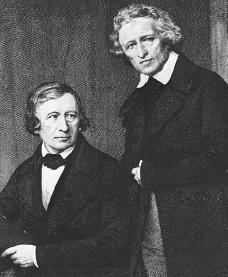
All but the last were collections of fairy tales written by Wilde. Most of the stories were incredibly sad. Remember the first time you read The Giving Tree? Well it's three books of that. But so good! The Brothers Grimm can suck it for writing such patronizing, moralistic stories to keep girls scared witless and locked inside bedrooms.

Okay, does that look like Matt Damon and Heath Ledger to you.

The Picture of Dorian Gray was Wilde's only novel. I wish he had written more. The basic plot of the novel revolves around a beautiful youth who is granted eternal youth, and in turn a magical portrait of himself ages instead. Dorian's sins and follies cause the portrait to age rapidly, giving him a visual representation of his own soul. It's an exploration of mortality and morality, and how each affects the other. In a way it reminded me of Drew Magary's Postmortal, where the introduction of immortality causes humanity to collapse into death, destruction and depravity. And after all that, the "immortals" don't get to live any longer than they would have normally as mortals.

Another thought: I've always been fascinated that stories always marry immortality with prosperity and hedonism. I guess, after all, if you were poor and lacked a lounge chair and a servant feeding you grapes, you might not want to live forever. But just once I want to see a hobo vampire. Instead they're all filthy rich and rolling around in velvet for no reason. Who's paying you!? Why is blood sucking a lucrative pursuit!?

Back on track...the preface to the novel, written by Wilde, is a wonderful meditation on art and meaning. Here it is:

The artist is the creator of beautiful things. To reveal art and conceal the artist is art's aim. The critic is he who can translate into another manner or a new material his impression of beautiful things.

The highest as the lowest form of criticism is a mode of autobiography. Those who find ugly meanings in beautiful things are corrupt without being charming. This is a fault.

Those who find beautiful meanings in beautiful things are the cultivated. For these there is hope. They are the elect to whom beautiful things mean only beauty.

There is no such thing as a moral or an immoral book. Books are well written, or badly written. That is all.

The nineteenth century dislike of realism is the rage of Caliban seeing his own face in a glass.

The nineteenth century dislike of romanticism is the rage of Caliban not seeing his own face in a glass. The moral life of man forms part of the subject-matter of the artist, but the morality of art consists in the perfect use of an imperfect medium. No artist desires to prove anything. Even things that are true can be proved. No artist has ethical sympathies. An ethical sympathy in an artist is an unpardonable mannerism of style. No artist is ever morbid. The artist can express everything. Thought and language are to the artist instruments of an art. Vice and virtue are to the artist materials for an art. From the point of view of form, the type of all the arts is the art of the musician. From the point of view of feeling, the actor's craft is the type. All art is at once surface and symbol. Those who go beneath the surface do so at their peril. Those who read the symbol do so at their peril. It is the spectator, and not life, that art really mirrors. Diversity of opinion about a work of art shows that the work is new, complex, and vital. When critics disagree, the artist is in accord with himself. We can forgive a man for making a useful thing as long as he does not admire it. The only excuse for making a useless thing is that one admires it intensely.

All art is quite useless.

You can now count Wilde as one of my favorite authors (there's a list somewhere).

Watchmen

Everything you've ever heard an enthusiastic nerd say about Alan Moore's masterpiece is absolutely true. Watchmen definitely lived up to the hype. And fun fact: I thought this would be a relatively breezy read, and could knock it out in just one bathtub session. It took me about a month to work through. It's not an all-night read. When you finish a chapter you have to sit back and think about it. Several days if needed. The structure is genius, weaving in journal entries, chapters from an imagined autobiography, snippets from a completely different comic (a comic within a comic! Inception!), among other things, right alongside the basic paneling and plot. There's nothing about this graphic novel that I would change. Being in the graphic novel format is the only way the story would succeed. I give credit to the filmmakers who attempted that adaptation a few years ago -- they did the best they possibly could have. But there's no way you could successfully translate between mediums here without missing the entire purpose.

On an imaginary list of the best novels I have ever read, this would be on it. Somewhere between Lolita and Wuthering Heights.

But don't take my word for it.

Thursday, January 19, 2012

thinking about the ocean


After reading Stieg Larsson's The Girl With the Dragon Tattoo, and watching both film adaptations, I've moved on to reading the next in the series: The Girl Who Played With Fire. Except that after getting through around a hundred pages I put it down, not wanting to move forward. Right now Lisbeth Salander is on Grenada, reading math textbooks on the beach, drinking rum and cokes, preventing murders, hooking up. I know she'll return to Sweden soon -- that cold and rapey land -- but I don't want to leave the sand yet.

I keep running across mentions of beaches and oceans today. Part of a poem I was reading mentioned a stone beach, just two words, and I had to stop and day dream about the ocean for ten minutes. There's something about the open water that fascinates me. All the time spent between infrequent vacations to the Atlantic feels claustrophobic, like life is a box with holes punched in it, just enough to keep one breathing. Everyday you open your eyes, there's always something there, blocking the line of vision. I look now and there's a wall. I look out the window and there's a twenty-story bank. I stare into the sky and people begin staring at me. As long as you're looking at something, the somethings of the world will always be on your mind.

Standing at the ocean, you can stare off into the horizon and see nothing. It's flat and expansive and appears unending. It's the closest most of us will ever get to being in space. It marks a delineation between here and everywhere else. The beach is synonymous with vacation, because maybe you can't go everywhere else, but you're sick and tired of here. It's why no one sets their beach chairs facing the hotels and pools. People don't come just for the bikinis and Mai Thais. Except Carmen Electra, probably.


I've flown over the Pacific, but never sailed across it. I can't even imagine what that it felt like for the first sailors to float unknowlingly into open water. Curiosity is so much stronger than fear, though. Sometimes I'm tempted, standing on the shore, to dive in and swim straight forward, unstopping. Just to see if I eventually hit a painted wall. Then Ed Harris will announce over the intercom that my entire life has been scripted. "What a boring show," I would mumble, swimming back to shore.

Last week I found a tour company that offers trips to Antarctica. You might say Antarctica is my Fiji. I squealed audibly when I found it. It's $8000, so it's pointless enthusiasm. But just knowing it's possible gives hope. Antarctica is not sandy or warm. But it does offer the ability to look at nothing. Or as close to nothing as we can get on Earth. And by looking at nothing I can stop thinking about myself, about everyone else, and just think about the world. The universe. Existence. Penguins. The fact that everything and everyone on Earth is made up of the same matter, the same elements, as what goes into the stars. We are star matter.

The best way to look at the picture of the Pale Blue Dot is to regard the mote of dust, acknowledge it,  note its insignificance. Then turn the camera around and let's explore.

In Defense of E-books

E-BOOK WARS

It's Darth Kindle vs. Luddite Skywalker!
Watch as young Amazon Skywalker turns to the glowing side!
'Read books on paper, you must,' Yoda mumbles.

How are these Star Wars / publishing industry analogies working for you? I need to go outside more often.

I never bought into the whole "ebooks are evil" scene. The emergence of ebooks has presented a load of controversial issues regarding permissions, pricing, distribution, access, ownership, censorship, piracy, monopolization, etc. And these all need to be discussed. Extensively.

But please stop talking about smelling books because you're creeping everyone out.

So what's defensible in the world of electronic booking?

1. There's the fact that I just bought the Collected Novels of José Saramago, all 13 novels and 3864 pages, as an ebook for $33. Buying them individually as paperbacks would have cost nearly $200.

This is how ebooks SHOULD be priced (or close to it -- this was pretty dirt cheap actually and I felt bad buying it). And a lot of the slightly older, less bestseller-y titles are. But buying a new release as an ebook? Forgettaboudit. Charging hardcover prices for something that is neither hard nor covered is something publishers need to get over.


2. James Joyce and Virginia Woolf! They entered into the public domain on January 1, 2012. Also known as Public Domain Day to us pale, bookshelf-dwelling shut-ins. I feel like right now I should be slowly taking my glasses off and cleaning them with the bottom of my sweater vest for knowing about Public Domain Day. All I need now are glasses and a sweater vest.

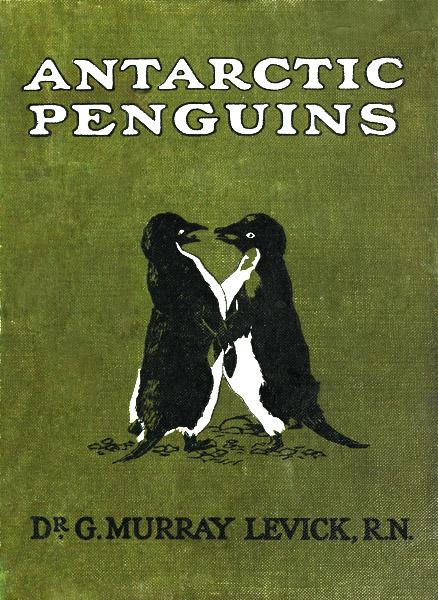
Project Gutenberg is grand, and makes me glad the internet exists. Cat videos and whatever this is are great too, but finding a book on Antarctic penguins that was published in 1914 and instantly downloading it for free is where it's all at.

Just look at these adorable penguins and tell me there's evil in the world.


3. Who knows how many Shakespeares, sisters of Shakespeare, Stephen Kings, or J.K. Rowlings died in obscurity before the internet because their writing was refused the light of day by stuffy publishers? Probably a lot. But now thanks to Al Gore and magic, writers can use the World Wide Web (or whatever you kids call it these days) as a one-stop shop to gain a following, market their writing, and publish their work without great cost to themselves. An important factor to consider when even online literary journals are beginning to charge reading fees for submitted work.

Take The Raven and the Writing Desk, a blog I follow, which just released a Best of collection of really excellent short stories and poetry as an ebook. And it's free until this Saturday! So check it out. Unless free is too expensive for you, you crazy person.


4. There's more than one way to skin a cat (eww) and there's more than one way to buy an ebook.

There's Powells, BooksOnBoard, and this gigantic list of like two hundred indie bookstores that sell ebooks. So if you're into the whole supporting local businesses thing, there you go. And don't forget to support your local starving writers while you're at it.

Look for an 'In Defense of Print Books' post in the near future, once I'm able to get my hands on particular print book I want to talk about and possibly cuddle with.

But NOT a 'Defense of Marriage' post, because I don't feel like wearing a sweater vest THAT much.


You are a bad person, Rick Santorum, and you should feel bad.

Tuesday, January 10, 2012

Sick, sick, sick

Unclear Vicissitudes, by Matt Kish

And no, I'm not referring to the QOTSA song.

Don't you just hate January and February? Every December I can see them looming on the horizon, cold and brown and depressing. No color, no warmth -- at least November has the decency to have rustling leaves and good smells.

If one compares the seasons to a person's life, January and February are the death throes. Give me the 20-somethings of May and June, but please don't let me live past December 31st.

It doesn't help when your Seasonal Affective Disorder (SAD :( ) is accompanied by some kind of mystery disease. For the past 8 weeks I have been coughing like a dying orphan in a Dickens novel. At first I thought it was pneumonia. But after I stopped coughing up green stuff and blood (!) I realized I was either over it or never had it in the first place. Although WebMD had me somewhat concerned I was going to die in a matter of hours. And possibly rise from the grave as the undead.

But it's still here, minus the hacking of blood, and I don't know what it is. COPD? Bronchitis? Super Asthma? Shriveling lungs? Whatever Gwyneth Paltrow gave to everybody? Of course I should go to the doctor, having healthcare and all that. But I have a terrifying phobia of doctors that I can't explain. Although it possibly started when I was 10 years old and my dentist called me an "idiot" to my face for refusing braces. I am many things, but an idiot I was not when I refused to make my parents spend $6000 on vanity. And look, 26 years old and my teeth haven't exploded or anything.

Regardless, the majority of my days as of late have been spent under a duvet, neglecting chores and friends, without the brain or willpower to pick up a book. Buying Nyquil has become a sunday night tradition. I actually googled "Ricola overdose" yesterday. I've been killing a lot of zombies in video games lately. It makes me feel better somehow. Although not better about myself.

Two artists whose blogs I follow have recently been sharing work they have created under the influence of sickness. Matt Kish, illustrator of the book Moby-Dick in Pictures: One Drawing for Every Page (which I intend to buy and review some day. some day.) created a series under the title "Radians" which can be in its entirety here.

On the other end of the spectrum is Gabby Schulz (aka Ken Dahl) who has created an ongoing comic series titled "Sick", which as of now includes 15 installments.


Simultaneously funny and depressing, the entire series thus far can be read here.