Google+

Wednesday, December 12, 2012

Warm Bodies

A novel told from the POV of a zombie suffering an existential crisis? Yes, please.

Warm Bodies by Isaac Marion was such a terrific read. I started it around 4pm yesterday and finished it 3am this morning. It was worth having bags under my eyes today. On the surface a love story, like any good zombie fiction it ultimately delves much deeper into questions of existential meaning, religion and human nature. The metaphors are everywhere. Zombies are never just zombies (unless you're playing Left 4 Dead).

In the zombiescape of Warm Bodies, the undead feed on the living not for nutritional sustenance, but in order to absorb the living aura and energy from them. And if they're lucky enough to get a bite of their victims' braaaaiiinnnnss, then they experience a much savored snapshot of that person's life and memories. The dead can't remember anything from their own past lives, so they hunt on the living to experience theirs.

Everything changes when the zombie R (the only syllable of his name he can remember) meets Julie, the living girlfriend of the man whose brain he just devoured. Whoops. Now he has memories of Julie and an overwhelming urge to protect her, and a surprising friendship forms. But their relationship sparks a revolution in the zombie populace, and not everyone would like to see a change from the status quo.

My only problem with the story is we're never given any real scientific reasoning behind the cause and cure of the undead plague. We're basically told it happened because of the moral bankruptcy of humanity, implying some sort of mystical or divine influence, damning mankind with a curse. Instead of just giving us something vague and mystical like that, I think it could've been better by providing a concrete event from which we could imply humanity's failure. Example: nuclear war where the residual radiation causes everyone who dies to rise again.

Then again it's a bit refreshing to read a scifi story that isn't drowning in unbelievable exposition. The characters we encounter are teenagers. They have no idea why this is happening, and they're not medical experts. So we know what they know. 

Overall a wonderful book. Here are some passages:

I don't know why we have to kill people. I don't know what chewing through a man's neck accomplishes. I steal what he has to replace what I lack. He disappears, and I stay. It's simple but senseless, arbitrary laws from some lunatic legislator in the sky. But following those laws keeps me walking, so I follow them to the letter. I eat until I stop eating, then I eat again.


"Yes. The Epic of Gilgamesh, one of the earliest known works of literature. Humanity's debut novel, you could say." Rosso flips through the brittle yellow pages. "Love, sex, blood, and tears. A journey to find eternal life. To escape death." He reaches across the table and hands the book to me. "It was written over four thousand years ago on clay tablets by people who tilled the mud and rarely lived past forty. It's survived countless wars, disasters, and plagues, and continues to fascinate to this day, because here I am, in the midst of modern ruin, reading it...The world that birthed that story is long gone, all its people are dead, but it continues to touch the present and future because someone cared enough about that world to keep it. To put it in words. To remember it."

I split the book open to the middle. The pages are riddled with ellipses, marking words and lines missing from the tablets, rotted out and lost to history. I stare at these marks and let their black dots fill my vision.

The ellipses reference is very important. The zombies' speech is riddled with ellipses, marking their effort in forming sentences at all. Their knowledge of words and communication is "rotted out and lost to history." Such a great cross reference by the author.


We were fearful in the best of times; how could we cope with the worst? So we found the tallest walls and poured ourselves behind them. We kept pouring until we were the biggest and strongest, elected the greatest generals and found the most weapons, thinking all this maximalism would somehow generate happiness. But nothing so obvious could ever work.

METAPHOR ALERT METAPHOR ALERT METAPHOR ALERT

It's also been adapted into a movie that'll be out February 1st. It'll have Rob Cordry and John Malkovich in it, and was directed by Jonathan Levine, director of last year's wonderful 50/50. It can't go wrong.


Excitement.

Friday, December 7, 2012

Anna Karenina

Alternate title: Terrible, Indecisive Rich People on Trains and the Peasants Who Serve Them

Finished Anna Karenina, which was an interesting journey. I only knew Anna's basic plot line (married woman who has an affair, ending tragically) going in, so I was pretty surprised at how it actually unfolded. For one, the title character herself is probably in less that half of the novel. The other half is dedicated to Konstantin Levin, a character you could possibly call a foil of Anna's, or at least a mirror to her character and the trials she faces. Anna is an official's wife pursuing a scandalous affair, and Levin a country gentleman hoping to marry the love of his life and find existential meaning.

The structure of the novel is genius, going back and forth between Anna and Levin's plotlines, with the climaxes in each story counterbalancing a slow build in the other. At the highpoint of Anna's story, when she is blissfully happy, Levin is in a deep depression. When things start looking up for him, Anna's world falls apart.

Anna Karenina addresses nearly every theme of human life that could possibly be addressed -- love, family, faith, communism, responsibility, passion, death, marriage, land, women's rights, train safety... -- but I like what translator Rosemary Edmonds cited as its key message, that "no one may build their happiness on another's pain." That's a pretty apt statement.

But damn, if Tolstoy isn't a wordy bastard. He puts Dickens to shame. And yet if you look at any "Best Novels of All Time" list, Anna Karenina is sure to be on it. If not at the very top. I'm not so sure I agree. Overall the stories and the novel's structure are masterful. The actual style of the writing is harder to judge, seeing as how it's translated from the original Russian. My biggest complaint is that the book just didn't need to be as long as it was. It was originally published in serial format, as all gigantic Victorian-age novels were, contributing to its massive length. At some points Tolstoy has his characters go off into tangents to discuss political issues that were obviously important at the time -- topics that someone picking up a periodical in 1873 would want to read about (anyone up for reading about 19th century Russian agrarian politics and peasant reform? Anyone? Bueller?)

But beyond his topical rants he also enjoys introducing seemingly random characters and plot lines that are never finished. What about that grumpy Italian artist? What was he about? Why was there an entire section dedicated to Kitty volunteering at a hospital? And the ill married dude falling in love with her? And what about when Levin's brother takes forever to decide whether or not he wants to propose to a girl, only to back out of it, and then we never hear from either of them ever again? Sure, these moments (moments meaning 50 page chunks) may tie-in mildly to the message and themes of the book. But after 1182 pages, we kinda already got the message, guy.

I'm still glad I read it, though. Even if it's just for bragging rights.

Here are some passages:

Stepan Arkadyevitch had not chosen his political opinions or his views; these political opinions and views had come to him of themselves, just as he did not choose the shapes of his hat and coat, but simply took those that were being worn. And for him, living in a certain society--owing to the need, ordinarily developed at years of discretion, for some degree of mental activity--to have views was just as indispensable as to have a hat.

In his Petersburg world all people were divided into utterly opposed classes. One, the lower class, vulgar, stupid, and, above all, ridiculous people, who believe that one husband ought to live with one wife whom he has lawfully married; that a girl should be innocent, a woman modest, and a man manly, self-controlled, and strong; that one ought to bring up one's children, earn one's bread, and pay one's debts; and various similar absurdities. This was the class of old-fashioned and ridiculous people. But there was another class of people, the real people. To this class they all belonged, and in it the great thing was to be elegant, generous, plucky, gay, to abandon oneself without a blush to every passion, and to laugh at everything else.

Sounds like a party.

And these fragmentary musical expressions, though sometimes beautiful, were disagreeable, because they were utterly unexpected and not led up to by anything. Gaiety and grief and despair and tenderness and triumph followed one another without any connection, like the emotions of a madman.

 Otherwise known as real life. "though sometimes beautiful."

Respect was invented to cover the empty place where love should be.

Also videogames.

He said that one must live for one's own wants, that is, that one must not live for what we understand, what we are attracted by, what we desire, but must live for something incomprehensible, for God, whom no one can understand nor even define. ... And not only I, but everyone, the whole world understands nothing fully but this, and about this only they have no doubt and are always agreed.

And I looked out for miracles, complained that I did not see a miracle which would convince me. A material miracle would have persuaded me. And here is a miracle, the sole miracle possible, continually existing, surrounding me on all sides, and I never noticed it! ... Fyodor says that one mustn't live for one's belly, but must live for truth, for God, and at a hint I understand him! And I and millions of men, men who lived ages ago and men living now--peasants, the poor in spirit and the learned, who have thought and written about it, in their obscure words saying the same thing--we are all agreed about this one thing: what we must live for and what is good. I and all men have only one firm, incontestable, clear knowledge, and that knowledge cannot be explained by the reason--it is outside it, and has no causes and can have no effects.

This is Levin's realization near the end of the novel, and the answer to his existential dilemma and lack of faith. I really like his conclusion, though I don't agree with it 100%. He goes on for several pages about his realization, and my interpretation is he's saying that humanity as a whole works toward the better good, for the community and others and not for "one's own belly," even though doing so is irrational. I do believe it's one of the greatest miracles of humankind that we do this -- help others when it does not serve ourselves directly. And I believe "God" can be found inside of that urge. But it's far from being irrational. It's for the survival of our own kind, and under the knowledge that we're all connected and inseparable.

Recalling a book I read last year, Sex at Dawn, it's theorized that even in prehistoric times humans were incredibly communal. And far from self-sacrificing, the idea of community and doing good for others was profoundly self-serving. Our biological makeup requires us to work together to clothe, house and feed ourselves. In a prehistoric community if you failed to carry your share of work, stole another's food, or killed someone, you would be kicked out, left to fend for yourself. And there are scary sabretooth tigers out there. It's a bit different from Patton Oswalt's theory of "sky cake," (where he argues weak cave people created religion to keep larger cave people from pillaging them), but it does place the purposeful origin of religion in the right place. The philosophies behind various religions are for the most part decidedly rational. "Do good. Don't do bad." And maybe we can continue to share this tiny planet for a little while longer.

So how does this tie in with Anna Karenina's insistence that no one "build their happiness on another's pain?" I guess by showing readers exactly what happens when we do. Anna builds her happiness by causing pain to her husband, her husband by denying her her son, Oblonsky by cheating on his wife, Vronksy by tempting Anna, Levin (and everyone else) by using/abusing peasants and servants, etc. (like I mentioned in the alternate title joke, they're basically all terrible people). The only difference being that in this post-pre-historic society only one of the characters is cast out to the sabretooth tigers: Anna.

Yet Anna's the same character who pleas, "I merely want to live, to do no one harm but myself. I have the right to do that, haven't I?" Intentional or not, Anna's actions do cause harm to others, as do every other character's actions. So perhaps a better statement would be: "Don't build your happiness on another's pain. If you can help it. And if you live in a perfect, non-judgmental liberated society. Good luck."

Whatever the moral or point, if there even is one, Anna Karenina can't be tied up nicely with a big, red bow. It's complicated and nasty, like the human experience. And I guess that's why it's so darn popular.

Thursday, December 6, 2012

E-books vs. Print Books: Part Deux

The e-book/print book war still rages on, but here's an excellent graphic from TeachingDegree.org arguing for the peaceful coexistence of e-books and print books:

 E-books Infographic

In the end they can and will coexist. Peacefully or not. I've argued  before in defense of e-books and in defense of print books. I still think the pricing and ownership issues in e-book publishing need tweaking before we've reached common ground. But I admit I've owned an e-reader for the past few months, and it's fabulous. More than anything I've found it's great to read free classics in the public domain. Try hauling around Les Miserables, "the brick," in print and you'll see what I mean. And the local public library has a great selection of freebies on Overdrive as well.

So let's call a truce and agree that as long as we access either format responsibly (and with a conscious mind of where our dollars are going), how you're reading those words doesn't really matter, as long as you're reading them.

Side note: I reread my "in defense" posts, and...what has happened to me? I used to be funny? Who knew. I turned 27 and lost all my joy. 

Wednesday, December 5, 2012

Book Purge

I went to a book fair the other day and bought 17 books. All for myself. I'm terrible. But hey, I got them all for $52! (for any readers in Virginia, you should check out the Green Valley Bookfair. It's incredible.)


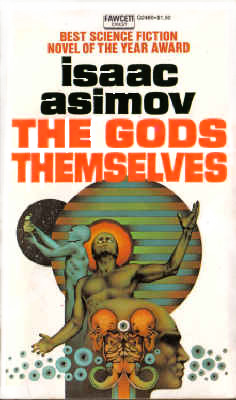
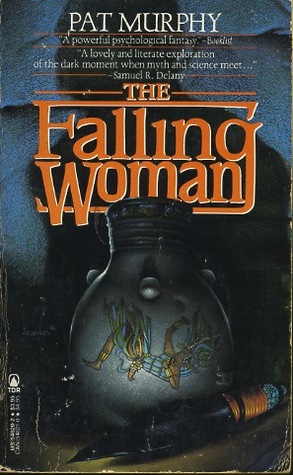
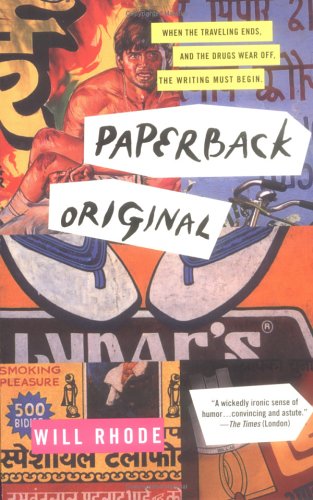
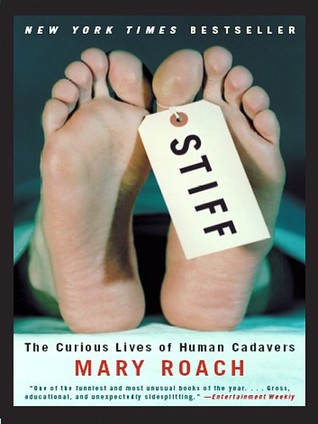
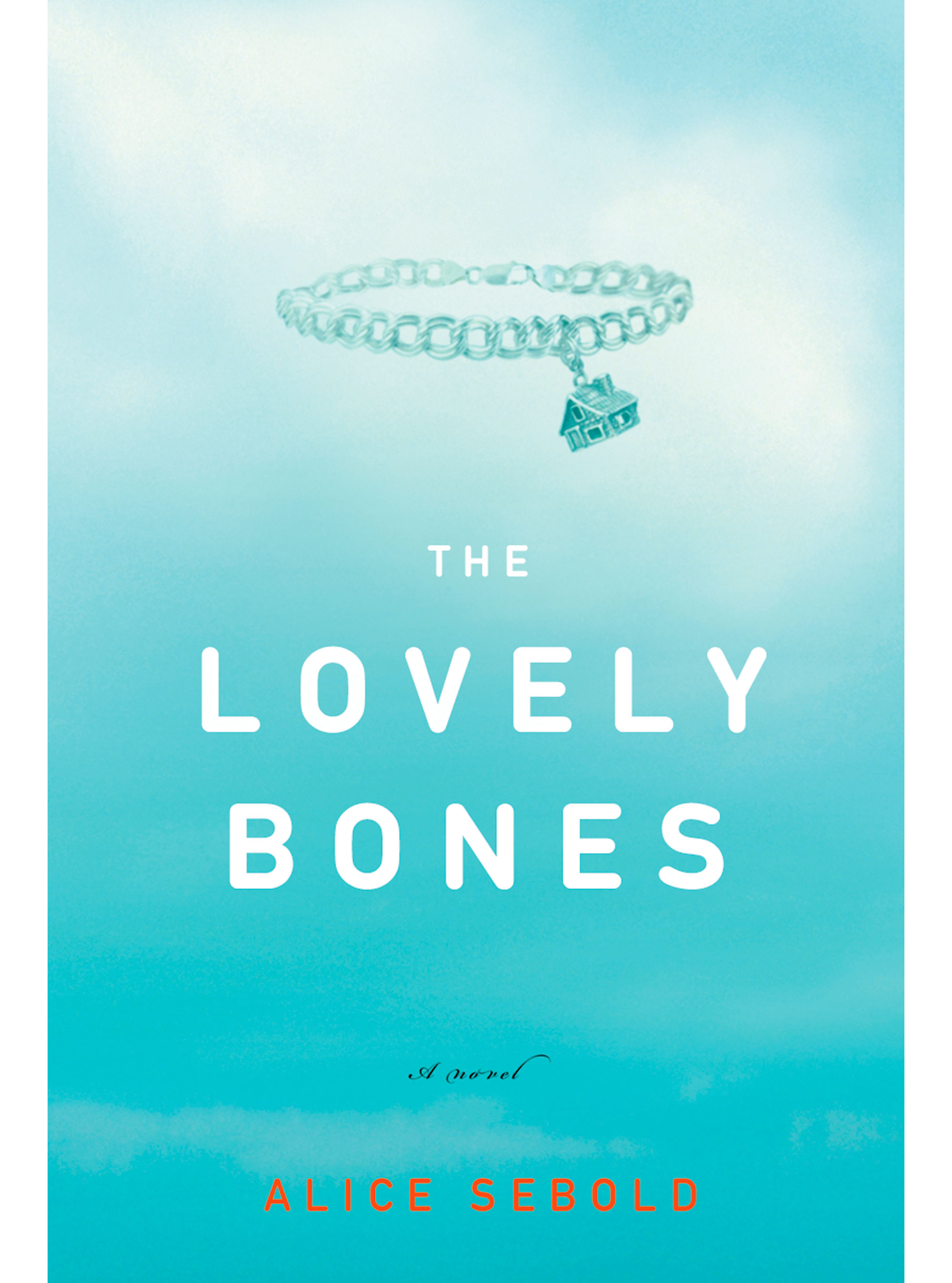
Once home, I decided to be honest with myself and purge all the titles on my shelves I know I'll never read or read again. I'll be putting these up on Bookmooch in a few days, but I thought I would give you guys first dibs on them like I did last time. Only three (Life in the Iron Mills, Poisonwood Bible, and Lovely Bones) have I read all the way through, so I can't give any suggestions. That's why I included Goodreads links. I went through a phase of buying used scifi paperbacks, so there are a ton of those, and what's pictured below is actually what the covers look like. And no, I don't know why the kids on the front of Talking To Dragons look like they've stepped out of an 1987 after school special.


So if you're interested in any of them leave a comment below claiming what you want, and then email me your mailing address at scifibrarian (at) gmail (dot) com.


on Goodreads
on Goodreads
on Goodreads
on Goodreads
on Goodreads
on Goodreads
on Goodreads
on Goodreads

on Goodreads
on Goodreads
on Goodreads
on Goodreads
on Goodreads
on Goodreads
on Goodreads
on Goodreads
on Goodreads
on Goodreads
on Goodreads
on Goodreads

on Goodreads
on Goodreads

Tuesday, December 4, 2012

I DON'T WANT ANYTHING TO DO WITH THE INTERNET

and yet, here I am.

You guys know I'm terrible at talking about poetry. I just like reading it. And sharing it.

I was going to type out some lines from Sophia Le Fraga's collection I DON'T WANT ANYTHING TO DO WITH THE INTERNET, but didn't want to to lose any of the formatting.

So here are three poorly photographed poems instead:


Buy the collection from the publisher here, check out Sophia's blog here, and read a better review of the collection here.

Thursday, November 8, 2012

World Book Night 2013


World Book Night has picked their list of books for 2013 and is now accepting applications for givers!

If you're not familiar with the event, here's a basic rundown from their website:

Each year, 30 books are chosen by an independent panel of librarians and booksellers. The authors of the books waive their royalties and the publishers agree to pay the costs of producing the specially-printed World Book Night U.S. editions. Bookstores and libraries sign up to be community host locations for the volunteer book givers.

After the book titles are announced, members of the public apply to personally hand out 20 copies of a particular title in their community. World Book Night U.S. vets the applications, and the givers are chosen based on their ability to reach light and non-readers. The selected givers choose a local participating bookstore or library from which to pick up the 20 copies of their book, and World Book Night U.S. delivers the books to these host locations.

Givers pick up their books in the week before World Book Night.  On April 23rd, they give their books to those who don’t regularly read and/or people who don’t normally have access to printed books, for reasons of means or access. 

I participated last year and it was pretty neat. They're so good at picking out appropriate books, too. Here are the picks for 2013:

The Handmaid's Tale, Margaret Atwood
City of Thieves, David Benioff
Fahrenheit 451, Ray Bradbury
My Antonia, Willa Cather
Girl With a Pearl Earring, Tracy Chevalier
The House on Mango Street, Sandra Cisneros
The Alchemist, Paulo Coelho
The Language of Flowers, Vanessa Diffenbaugh
The Worst Hard Time, Timothy Egan
Bossypants, Tina Fey
Looking for Alaska, John Green
Playing for Pizza, John Grisham
Mudbound, Hillary Jordan
The Phantom Tollbooth, Norton Juster
Moneyball, Michael Lewis
The Tender Bar, J.R. Moehringer
Devil in a Blue Dress, Walter Mosley
Middle School: the Worst Years of My Life, James Patterson
Good Omens, Terry Pratchett and Neil Gaiman
The Lightning Thief, Rick Riordan
Population 485, Michael Perry
Montana Sky, Nora Roberts
Look Again, Lisa Scottoline
Me Talk Pretty One Day, David Sedaris
The No. 1 Ladies' Detective Agency, Alexander McCall Smith
Glaciers, Alexis M. Smith
A Connecticut Yankee in King Arthur's Court, Mark Twain
Salvage the Bones, Jesmyn Ward
Favorite American Poems, Paul Negri (ed.)

Visit their books page for more info on each of the titles (because I love you but no, I'm not linking each one of those individually).

And then maybe apply to be a giver? It's super easy and you'll even get a nifty button to wear. Not to mention you'll be supporting literacy.

Over the next few weeks you'll probably be hearing certain politicians and pundits whining about people wanting "stuff" and "things" (notably using such vague words to avoid using terms like "food" or "shelter"). But in my opinion it's a good thing to take care of your own. We're all on the same planet whether you like it or not, and lifelong literacy is vital and important to the human condition. So find someone who's reluctant to read, doesn't know what to read, or can't afford to buy a book to read, and put that book in their hands.

Come hand out free "stuff" with me.

Tuesday, October 30, 2012

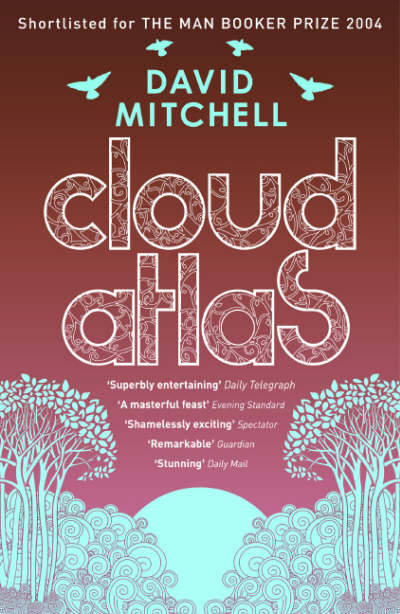
Cloud Atlas


So far my favorite book I've read this year. The plot of David Mitchell's Cloud Atlas is a bit hard to explain, but here's the basic gist. The novel consists of six different narratives, set in different time periods on Earth. All of the stories are interconnected in some way, and feature a reincarnating soul who is reborn as a different race or gender in each generation, but always with a comet shaped birthmark. The overall message is that humanity is connected and inseperable. Race, gender and creed are illusions, fluid and always changing, and every action you take has a direct reaction on future events and your future self.

It's a book lover's book, with each narrative segment written in the style of a particular genre to fit its time period. There's the Colonial epistolary novel, the mystery thriller, the Kingsley Amis-style British comedy, an Orwellian futuristic dystopia, and the oral tradition of campfire storytelling. But the theme is always the same: humanity rejects what they see as different. But if you embrace difference, overcome ignorance and work toward the common good, every action you take will have profound influence over the future.

My favorite narrative segment has to be the 'Ghastly Ordeal of Timothy Cavendish', fitting into the aforementioned Kingsley Amis-style British comedy. Recounting the tale of an aging publisher trying to escape from a One Flew Over the Cuckoo's Nest-esque nursing home, it was a nice break from the seriousness of the other segments. One of the darker stories, 'Orison of Sonmi-451', was also a favorite. In a near future dystopic Korea, "corpocracy" reigns, and clones ("fabricants") are mass-produced as the workforce. Regular citizens ("purebloods") are required to spend and consume, and corporations rule over all aspects of life. It's a nightmarish and possibly inevitable future. It brought back memories of reading Oryx and Crake and The Year of the Flood.

I had numerous passages marked, but I'll control myself and just share a few:


I asked if Siddhartha was indeed a god.

Many called him so, the Abbess agreed, but Siddhartha does not influence fortune or weather or perform many of a divinity's traditional functions. Rather, Siddhartha is a dead man and a living ideal. The man taught about overcoming pain, and influencing one's future reincarnations. "But I pray to the idea." She indicated the meditating giant. "Early, so he knows I'm serious."


Sometimes the fluffy bunny of incredulity zooms around the bend so rapidly that the greyhound of language is left, agog, in the starting cage. A feisty stagger was needed to reach the next train befor eit left--only to find it had been canceled! But, "luckly," the train before mine was so late tha tit still hadn't departed. All the seats were taken, and I had to squeeze into a three-inch slot. I lost my balance when the train pulled away, but a human crumple zone buffered my fall. We stayed like that, half fallen. The Diagonal People....

I elbowed my way into the grubby cafe, bought a pie that tasted of shoe polish and a pot of tea with cork crumbs floating in it, and eavesdropped on a pair of Shetland pony breeders. Despondency makes one hanker after lives on never led. Why have you given your life to books, TC? Dull, dull, dull! The memoirs are bad enough, but all that ruddy fiction! Hero goes on a journey, stranger comes to town, somebody wants something, they get it or they don't, will is pitted against will. "Admire me, for I am a metaphor."

Scholars discern motions in history & formulate these motions into rules that govern the rises & falls of civilizations. My belief runs contrary,  however. To wit: history admits no rules; only outcomes.

What precipitates outcomes? Vicious acts & virtuous acts.

What precipitates acts? Belief.

Belief is both prize & battlefield, within the mind & in the mind's mirror, the world. If we believe humanity is a ladder of tribes, a colosseum of confrontation, exploitation & bestiality, such a humanity is surely brought into being, & history's Horroxes, Boerhaaves & Gooses shall prevail. You & I, the moneyed, the privileged, the fortunate, shall not fare so badly in this world, provided our luck holds. What of it if our consciences itch? Why undermind the dominance of our race, our gunships, our heritage & our legacy? Why fight the "natural" (oh, weaselly word!) order of things?

Why? Because of this:--one find day, a purely predatroy world shall consume itself. Yes, the Devil shall take the hindmost until the foremost is the hindmost. In an individual, selfishness uglifies the soul; for the human species, selfishness is extinction.

Is this the doom written within our nature?

If we believe that humanity may transcend tooth & claw, if we believe divers races & creeds can share this world as peaceably as the orphans share their candlenut tree, if we believe leaders must be just, violence muzzled, power accountable & the riches of the Earth & its Oceans shared equitably, such a world will come to pass.

Rights are susceptible to subversion, as even granite is susceptible to erosion. My fifth Declaration posits how, in a cycle as old as tribalism, ignorance of the Other engenders fear; fear engenders hatred; hatred engenders violence; violence engenders further violence until the only"rights," the only law, are whatever is willed by the most powerful.


And if you're interested in the film adaptation that was just released, maybe check out my review here at my other blog.