Google+

Tuesday, January 31, 2012

Oscar Wilde and Rorschach

January was a long one. I can't believe it's been 31 days since I drank too much champagne and passed out on my bed fully-clothed and...well, you don't want to hear about that.

All that time and I still haven't written those reviews for books I read in December. It might be because I lost all the notes I took when reading them. Or it might be because someone gave me a copy of Dead Rising and I spent a hilarious amount of time getting the 'zombie genocider' achievement. Hooray! 20 imaginary points have been added to my imaginary videogame success tally. Let's all live in the internet.

I need to get on with my life so here's the world's laziest reviews of some really great books.

All of that Oscar Wilde stuff
(A House of Pomegranates, Lord Arthur Savile's Crime and Other Stories, The Happy Prince and Other Tales, and The Picture of Dorian Gray)

All but the last were collections of fairy tales written by Wilde. Most of the stories were incredibly sad. Remember the first time you read The Giving Tree? Well it's three books of that. But so good! The Brothers Grimm can suck it for writing such patronizing, moralistic stories to keep girls scared witless and locked inside bedrooms.
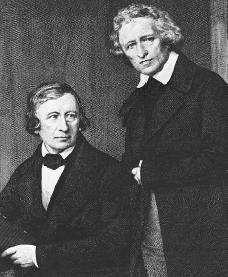
Okay, does that look like Matt Damon and Heath Ledger to you.

The Picture of Dorian Gray was Wilde's only novel. I wish he had written more. The basic plot of the novel revolves around a beautiful youth who is granted eternal youth, and in turn a magical portrait of himself ages instead. Dorian's sins and follies cause the portrait to age rapidly, giving him a visual representation of his own soul. It's an exploration of mortality and morality, and how each affects the other. In a way it reminded me of Drew Magary's Postmortal, where the introduction of immortality causes humanity to collapse into death, destruction and depravity. And after all that, the "immortals" don't get to live any longer than they would have normally as mortals.

Another thought: I've always been fascinated that stories always marry immortality with prosperity and hedonism. I guess, after all, if you were poor and lacked a lounge chair and a servant feeding you grapes, you might not want to live forever. But just once I want to see a hobo vampire. Instead they're all filthy rich and rolling around in velvet for no reason. Who's paying you!? Why is blood sucking a lucrative pursuit!?

Back on track...the preface to the novel, written by Wilde, is a wonderful meditation on art and meaning. Here it is:

The artist is the creator of beautiful things. To reveal art and conceal the artist is art's aim. The critic is he who can translate into another manner or a new material his impression of beautiful things.

The highest as the lowest form of criticism is a mode of autobiography. Those who find ugly meanings in beautiful things are corrupt without being charming. This is a fault.

Those who find beautiful meanings in beautiful things are the cultivated. For these there is hope. They are the elect to whom beautiful things mean only beauty.

There is no such thing as a moral or an immoral book. Books are well written, or badly written. That is all.

The nineteenth century dislike of realism is the rage of Caliban seeing his own face in a glass.

The nineteenth century dislike of romanticism is the rage of Caliban not seeing his own face in a glass. The moral life of man forms part of the subject-matter of the artist, but the morality of art consists in the perfect use of an imperfect medium. No artist desires to prove anything. Even things that are true can be proved. No artist has ethical sympathies. An ethical sympathy in an artist is an unpardonable mannerism of style. No artist is ever morbid. The artist can express everything. Thought and language are to the artist instruments of an art. Vice and virtue are to the artist materials for an art. From the point of view of form, the type of all the arts is the art of the musician. From the point of view of feeling, the actor's craft is the type. All art is at once surface and symbol. Those who go beneath the surface do so at their peril. Those who read the symbol do so at their peril. It is the spectator, and not life, that art really mirrors. Diversity of opinion about a work of art shows that the work is new, complex, and vital. When critics disagree, the artist is in accord with himself. We can forgive a man for making a useful thing as long as he does not admire it. The only excuse for making a useless thing is that one admires it intensely.

All art is quite useless.

You can now count Wilde as one of my favorite authors (there's a list somewhere).

Watchmen

Everything you've ever heard an enthusiastic nerd say about Alan Moore's masterpiece is absolutely true. Watchmen definitely lived up to the hype. And fun fact: I thought this would be a relatively breezy read, and could knock it out in just one bathtub session. It took me about a month to work through. It's not an all-night read. When you finish a chapter you have to sit back and think about it. Several days if needed. The structure is genius, weaving in journal entries, chapters from an imagined autobiography, snippets from a completely different comic (a comic within a comic! Inception!), among other things, right alongside the basic paneling and plot. There's nothing about this graphic novel that I would change. Being in the graphic novel format is the only way the story would succeed. I give credit to the filmmakers who attempted that adaptation a few years ago -- they did the best they possibly could have. But there's no way you could successfully translate between mediums here without missing the entire purpose.

On an imaginary list of the best novels I have ever read, this would be on it. Somewhere between Lolita and Wuthering Heights.

But don't take my word for it.

Thursday, January 19, 2012

thinking about the ocean


After reading Stieg Larsson's The Girl With the Dragon Tattoo, and watching both film adaptations, I've moved on to reading the next in the series: The Girl Who Played With Fire. Except that after getting through around a hundred pages I put it down, not wanting to move forward. Right now Lisbeth Salander is on Grenada, reading math textbooks on the beach, drinking rum and cokes, preventing murders, hooking up. I know she'll return to Sweden soon -- that cold and rapey land -- but I don't want to leave the sand yet.

I keep running across mentions of beaches and oceans today. Part of a poem I was reading mentioned a stone beach, just two words, and I had to stop and day dream about the ocean for ten minutes. There's something about the open water that fascinates me. All the time spent between infrequent vacations to the Atlantic feels claustrophobic, like life is a box with holes punched in it, just enough to keep one breathing. Everyday you open your eyes, there's always something there, blocking the line of vision. I look now and there's a wall. I look out the window and there's a twenty-story bank. I stare into the sky and people begin staring at me. As long as you're looking at something, the somethings of the world will always be on your mind.

Standing at the ocean, you can stare off into the horizon and see nothing. It's flat and expansive and appears unending. It's the closest most of us will ever get to being in space. It marks a delineation between here and everywhere else. The beach is synonymous with vacation, because maybe you can't go everywhere else, but you're sick and tired of here. It's why no one sets their beach chairs facing the hotels and pools. People don't come just for the bikinis and Mai Thais. Except Carmen Electra, probably.


I've flown over the Pacific, but never sailed across it. I can't even imagine what that it felt like for the first sailors to float unknowlingly into open water. Curiosity is so much stronger than fear, though. Sometimes I'm tempted, standing on the shore, to dive in and swim straight forward, unstopping. Just to see if I eventually hit a painted wall. Then Ed Harris will announce over the intercom that my entire life has been scripted. "What a boring show," I would mumble, swimming back to shore.

Last week I found a tour company that offers trips to Antarctica. You might say Antarctica is my Fiji. I squealed audibly when I found it. It's $8000, so it's pointless enthusiasm. But just knowing it's possible gives hope. Antarctica is not sandy or warm. But it does offer the ability to look at nothing. Or as close to nothing as we can get on Earth. And by looking at nothing I can stop thinking about myself, about everyone else, and just think about the world. The universe. Existence. Penguins. The fact that everything and everyone on Earth is made up of the same matter, the same elements, as what goes into the stars. We are star matter.

The best way to look at the picture of the Pale Blue Dot is to regard the mote of dust, acknowledge it,  note its insignificance. Then turn the camera around and let's explore.

In Defense of E-books

E-BOOK WARS

It's Darth Kindle vs. Luddite Skywalker!
Watch as young Amazon Skywalker turns to the glowing side!
'Read books on paper, you must,' Yoda mumbles.

How are these Star Wars / publishing industry analogies working for you? I need to go outside more often.

I never bought into the whole "ebooks are evil" scene. The emergence of ebooks has presented a load of controversial issues regarding permissions, pricing, distribution, access, ownership, censorship, piracy, monopolization, etc. And these all need to be discussed. Extensively.

But please stop talking about smelling books because you're creeping everyone out.

So what's defensible in the world of electronic booking?

1. There's the fact that I just bought the Collected Novels of José Saramago, all 13 novels and 3864 pages, as an ebook for $33. Buying them individually as paperbacks would have cost nearly $200.

This is how ebooks SHOULD be priced (or close to it -- this was pretty dirt cheap actually and I felt bad buying it). And a lot of the slightly older, less bestseller-y titles are. But buying a new release as an ebook? Forgettaboudit. Charging hardcover prices for something that is neither hard nor covered is something publishers need to get over.


2. James Joyce and Virginia Woolf! They entered into the public domain on January 1, 2012. Also known as Public Domain Day to us pale, bookshelf-dwelling shut-ins. I feel like right now I should be slowly taking my glasses off and cleaning them with the bottom of my sweater vest for knowing about Public Domain Day. All I need now are glasses and a sweater vest.

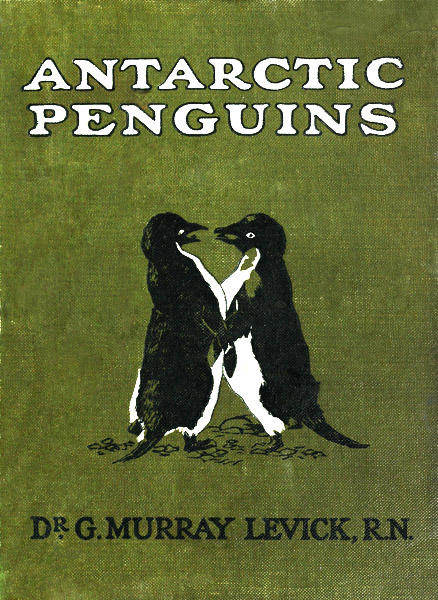
Project Gutenberg is grand, and makes me glad the internet exists. Cat videos and whatever this is are great too, but finding a book on Antarctic penguins that was published in 1914 and instantly downloading it for free is where it's all at.

Just look at these adorable penguins and tell me there's evil in the world.


3. Who knows how many Shakespeares, sisters of Shakespeare, Stephen Kings, or J.K. Rowlings died in obscurity before the internet because their writing was refused the light of day by stuffy publishers? Probably a lot. But now thanks to Al Gore and magic, writers can use the World Wide Web (or whatever you kids call it these days) as a one-stop shop to gain a following, market their writing, and publish their work without great cost to themselves. An important factor to consider when even online literary journals are beginning to charge reading fees for submitted work.

Take The Raven and the Writing Desk, a blog I follow, which just released a Best of collection of really excellent short stories and poetry as an ebook. And it's free until this Saturday! So check it out. Unless free is too expensive for you, you crazy person.


4. There's more than one way to skin a cat (eww) and there's more than one way to buy an ebook.

There's Powells, BooksOnBoard, and this gigantic list of like two hundred indie bookstores that sell ebooks. So if you're into the whole supporting local businesses thing, there you go. And don't forget to support your local starving writers while you're at it.

Look for an 'In Defense of Print Books' post in the near future, once I'm able to get my hands on particular print book I want to talk about and possibly cuddle with.

But NOT a 'Defense of Marriage' post, because I don't feel like wearing a sweater vest THAT much.


You are a bad person, Rick Santorum, and you should feel bad.

Tuesday, January 10, 2012

Sick, sick, sick

Unclear Vicissitudes, by Matt Kish

And no, I'm not referring to the QOTSA song.

Don't you just hate January and February? Every December I can see them looming on the horizon, cold and brown and depressing. No color, no warmth -- at least November has the decency to have rustling leaves and good smells.

If one compares the seasons to a person's life, January and February are the death throes. Give me the 20-somethings of May and June, but please don't let me live past December 31st.

It doesn't help when your Seasonal Affective Disorder (SAD :( ) is accompanied by some kind of mystery disease. For the past 8 weeks I have been coughing like a dying orphan in a Dickens novel. At first I thought it was pneumonia. But after I stopped coughing up green stuff and blood (!) I realized I was either over it or never had it in the first place. Although WebMD had me somewhat concerned I was going to die in a matter of hours. And possibly rise from the grave as the undead.

But it's still here, minus the hacking of blood, and I don't know what it is. COPD? Bronchitis? Super Asthma? Shriveling lungs? Whatever Gwyneth Paltrow gave to everybody? Of course I should go to the doctor, having healthcare and all that. But I have a terrifying phobia of doctors that I can't explain. Although it possibly started when I was 10 years old and my dentist called me an "idiot" to my face for refusing braces. I am many things, but an idiot I was not when I refused to make my parents spend $6000 on vanity. And look, 26 years old and my teeth haven't exploded or anything.

Regardless, the majority of my days as of late have been spent under a duvet, neglecting chores and friends, without the brain or willpower to pick up a book. Buying Nyquil has become a sunday night tradition. I actually googled "Ricola overdose" yesterday. I've been killing a lot of zombies in video games lately. It makes me feel better somehow. Although not better about myself.

Two artists whose blogs I follow have recently been sharing work they have created under the influence of sickness. Matt Kish, illustrator of the book Moby-Dick in Pictures: One Drawing for Every Page (which I intend to buy and review some day. some day.) created a series under the title "Radians" which can be in its entirety here.

On the other end of the spectrum is Gabby Schulz (aka Ken Dahl) who has created an ongoing comic series titled "Sick", which as of now includes 15 installments.


Simultaneously funny and depressing, the entire series thus far can be read here.

Saturday, December 31, 2011

77 ain't bad

Books owned that were read

Or is it?

That's the final number of books read this year. It's not 100, but I'm happy. I'm behind on the reviews -- those stopped at number 70. I'll finish the rest in the next week or two.

So here's the list:

1. The Awakening, Kate Chopin
2. Journey to the Centre of the Earth, Jules Verne
3. Dealing with Dragons, Patricia C. Wrede
4. Zombie Spaceship Wasteland, Patton Oswalt
5. Canticle for Leibowitz, Walter Miller Jr.
6. Perfume: The Story of a Murderer, Patrick Suskind
7. Jurassic Park, Michael Crichton
8. I Have the Right to Destroy Myself, Young-Ha Kim
9. Fight Club, Chuck Palahniuk
10. Breakfast of Champions, Kurt Vonnegut
11. Eeeee Eee Eeee, Tao Lin
12. The Hunger Games, Suzanne Collins
13. Catching Fire, Suzanne Collins
14. Mockingjay, Suzanne Collins
15. Take the Cannoli, Sarah Vowell
16. No Country for Old Men, Cormac McCarthy
17. High Fidelity, Nick Hornby
18. Unfamiliar Fishes, Sarah Vowell
19. Shoplifting from American Apparel, Tao Lin
20. Wide Sargasso Sea, Jean Rhys
21. Sandman: Preludes and Nocturnes, Neil Gaiman
22. Vox, Nicholson Baker
23. V for Vendetta, Alan Moore
24. Very Far Away from Anywhere Else, Ursula Le Guin
25. Cognitive-Behavioral Therapy, Tao Lin
26. You Are a Little Bit Happier Than I Am, Tao Lin
27. The Stranger, Albert Camus
28. A Listener's Diary, Sarah Vowell
29. Contact, Carl Sagan
30. A Visit from the Goon Squad, Jennifer Egan
31. Drinking at the Movies, Julia Wertz
32. Skim, Mariko Tamaki
33. The Lifted Veil, George Eliot
34. Mathilda, Mary Shelley
35. Lady Susan, Jane Austen
36. The Hound of the Baskervilles, Arthur Conan Doyle
37. The Help, Kathryn Stockett
38. Snow Flower and the Secret Fan, Lisa See
39. First Love, Ivan Turgenev
40. One Day, David Nicholls
41. Parnassus on Wheels, Christopher Morley
42. During My Nervous Breakdown I Want My Biographer Present, Brandon Scott Gorrell
43. No One Belongs Here More Than You, Miranda July
44. The Gospel of Anarchy, Justin Taylor
45. Everything is Going to Be Great, Rachel Shukert
46. The Postmortal, Drew Magary
47. The Shit My Dad Says, Justin Halpern
48. Ready Player One, Ernest Cline
49. Sloth, Gilbert Hernandez
50. Love and Rockets: New Stories Vol. 1, Gilbert Hernandez
51. Ayiti, Roxane Gay
52. The Farthest Shore, Ursula Le Guin
53. Tehanu, Ursula Le Guin
54. Tales from Earthsea, Ursula Le Guin
55. The Other Wind, Ursula Le Guin
56. Bed, Tao Lin
57. Sometimes My Heart Pushes My Ribs, Ellen Kennedy
58. Wilson, Daniel Clowes
59. Ghost World, Daniel Clowes
60. American Psycho, Bret Easton Ellis
61. When She Woke, Hillary Jordan
62. Camera, Jean-Phillippe Toussaint
63. Selected Unpublished Blog Posts of a Mexican Panda Express Employee, Megan Boyle
64. Break it Down, Lydia Davis
65. Vathek, William Beckford
66. The Girl With the Dragon Tattoo, Stieg Larsson
67. The Importance of Being Earnest, Oscar Wilde
68. A Clockwork Orange, Anthony Burgess
69. A Room of One's Own, Virginia Woolf
70. Us, Michael Kimball
71. The Picture of Dorian Gray, Oscar Wilde
72. The Happy Prince, Oscar Wilde
73. A House of Pomegranates, Oscar Wilde
74. Lord Arthur Savile's Crime and Other Stories, Oscar Wilde
75. The Clouds Should Know Me By Now: Buddhist Poet Monks of China
76. Willow, Wine, Mirror, Moon: Women's Poems from Tang China, Jeanne Larsen
77. Watchmen, Alan Moore

And I wanted to see what my unconscious reading habits looked like statistically:

40% were by female authors
60% by male authors

Only 16% by authors of color

60% novels
12% graphic novels
10% short stories
9% poetry
6% non-fiction
3% other

12% translated from another language

So it was the year of the English white male novel. No surprise there. Next year I will strive for more diversity.

But I did manage to knock 21 off The Guardian's 1000 Novels Everyone Must Read list. If I keep going at that rate I'll finish off all 1000 when I'm... 70 years old! But by then they'll change up the list and we'll all be too preoccupied wearing anti-gravity boots and dancing on the ceiling to care about books. If we even make it to the year 2013.

Countdown to the zombie apocalypse 2012!

3...2...1...

Monday, December 19, 2011

Us, 70/100

I feel a little bit like a dick for giving Us by Michael Kimball only two stars on goodreads.

Here's why: Kimball wrote the story about his dying grandparents. Most of it is from the perspective of the grandfather, who takes care of his wife after she has a seizure and goes into a coma. Very little is from the perspective of the grandmother. There's also a portion from the point-of-view of Kimball as a boy going to his first funeral.

At first it is heartbreaking. But by the end I felt like the biggest Ebenezer Scrooge (McDuck) in the world, at one point doing the jerk-off motion with my hand while reading it. So heartless! I know. But the entire thing seemed like an exercise in emotional masturbation.

It also felt like something meant for people who maybe haven't gone through the type of emotional trauma experienced by this family (although it's something we all eventually go through). I'm not one of these people. The problem with having a large family is that you become very familiar with sickness, death, and funerals. I've been visiting hospitals and attending funerals all my life. It hasn't gotten any easier. There's nothing more profoundly disturbing to me than going to an open-casket viewing or putting flowers on a grave. I did the latter just this weekend.

I understand why Kimball wrote this book. It was a way to process what he experienced, and what his grandfather must have gone through watching his wife die. All the same, I can't give it a good review based entirely on the subject matter and the fact that it made me weep like an Oprah audience member. You can't write a book that consists entirely of the last third of Nicholas Sparks novel.

The idea would work wonderfully as a writing exercise, or a creative writing class work-in-progress. A personal reflection or meditation. The most disturbing meditation ever I presume.

However it blows my mind that anyone could have actually enjoyed reading this. Or got anything out of it. Or, for the love of god, would recommend it to another person. This book would make the worst Christmas present ever.

"Merry Christmas! When considering what to get you I thought, 'I bet this person would just LOVE reading about old people slowly and painfully dying!' Can you pass the eggnog?"

Bah humbug.

Thursday, December 15, 2011

A Room of One's Own, 69/100

It feels like I've read the first chapter of Woolf's book-length essay a thousand times; where the fictional narrator is chastised for (literally) walking off the path at Cambridge's campus, barred from the library, and complains about being served prunes for dinner. The prune discussion, although funny, always led me astray from the book's purpose and caused me to put it down. But picking up from that point and moving on I was finally able to finish it this time; and I'm so glad I did.

Apologies up front for all the very long quotes I am about to post. I had more marked but decided to take mercy upon the internet. Besides, you can always read the entire thing for free right here.

Woolf's published essay is a lengthened version of a series of lectures she presented to two women's colleges at Cambridge in 1928. I would give anything to have been in the lecture halls when Woolf recited her views, just to see the women's reactions. Presented with the broad subject of "women and fiction", Woolf narrows it to a discussion of why women have been unable to produce the volume and quality of work that men have been able to over the ages. The answer is fairly simple: women haven't had the advantages that men have. It's hard to write the complete works of Wm. Shakespeare when one is forced into marriage, take care of children, and refused the right to own property. Instead, she argues, any woman with the genius of Shakespeare during his era would have been driven mad and committed suicide; an eerie precursor to Woolf's own fate.

My only criticism of A Room of One's Own, as others have pointed out, is that Woolf doesn't discuss the conditions of women of color. It certainly would have made it a longer essay, but its glaring omission leaves holes in her argument. There should be a disclaimer at the beginning of book stating that what she means by "women and fiction" is really "middle-class white women and fiction."

Regardless, it's a must-read for anyone interested in the history of English literature, and even for writers, for there are plenty of observations on what it takes and what's needed to be a successful writer. Or at least a self-respecting one.

Now here are some lengthy passages I couldn't edit down without their losing meaning and soul:
Women have served all these centuries as looking-glasses possessing the magic and delicious power of reflecting the figure of man at twice its natural size....That is why Napoleon and Mussolini both insist so emphatically upon the inferiority of women, for if they were not inferior, they would cease to enlarge. That serves to explain in part the necessity that women so often are to men. And it serves to explain how restless they are under her criticism; how impossible it is for her to say to them this book is bad, this picture is feeble, or whatever it may be, without giving far more pain and rousing far more anger than a man would do who gave the same criticism. For if she begins to tell the truth, the figure in the looking-glass shrinks; his fitness for life is diminished. How is he to go on giving judgement, civilising natives, making laws, writing books, dressing up and speechifying at banquets, unless he can see himself at breakfast and at dinner at least twice the size he really is? ... They start the day confident, braced, believing themselves desired at Miss Smith's tea party; they say to themselves as they go into the room, I am the superior of half the people here, and it is thus that they speak with that self-confidence, that self-assurance, which have had such profound consequences in public life and lead to such curious notes in the margin of the private mind.

What genius, what integrity it must have required in face of all that criticism, in the midst of that purely patriarchal society, to hold fast to the thing as they saw it without shrinking. Only Jane Austen did it and Emily Bronte. It is another feather, perhaps the finest, in their caps. They wrote as women write, not as men write. Of all the thousand women who wrote novels then, they alone entirely ignored the perpetual admonitions of the eternal pedagogue--write this, think that. They alone were deaf to that persistent voice, now grumbling, now patronising, now domineering, now grieved, now shocked, now angry, now avuncular, that voice which cannot let women alone, but must be at them, like some too conscientious governess, adjuring them...to be refined...admonishing them, if they would be good and win, as I suppose, some shiny prize, to keep within certain limits which the gentleman in questions thinks suitable...It would have needed a very stalwart young woman in 1828 to disregard all those snubs and chidings and promises of prizes. One must have been something of a firebrand to say to oneself, Oh, but they can't buy literature too. Literature is open to everybody. I refuse to allow you, Beadle though you are, to turn me off the grass. Lock up your libraries if you like; but there is no gate, no lock, no bolt that you can set upon the freedom of my mind.

...where books are concerned, it is notoriously difficult to fix labels of merit in such a way that they do not come off. Are not reviews of current literature a perpetual illustration of the difficulty of judgment? "This great book," "this worthless book," the same books is called by both names. Praise and blame alike mean nothing. No, delightful as the pastime of measuring may be, it is the most futile of all occupations, and to submit to the degrees of the measurers the most servile of attitudes. So long as you write what you wish to write, that is all that matters; and whether it matters for ages or only for hours, nobody can say. But to sacrifice a hair of the head of your vision, a shade of its colour, in deference to some Headmaster with a silver pot in his hand or to some professor with a measuring-rod up his sleeve, is the most abject treachery...

...fiction is like a spider’s web, attached ever so lightly perhaps, but still attached to life at all four corners. Often the attachment is scarcely perceptible; Shakespeare’s plays, for instance, seem to hang there complete by themselves. But when the web is pulled askew, hooked up at the edge, torn in the middle, one remembers that these webs are not spun in mid-air by incorporeal creatures, but are the work of suffering human beings, and are attached to grossly material things, like health and money and the houses we live in.

Literature is strewn with the wreckage of men who have minded beyond reason the opinions of others.

For masterpieces are not single and solitary births; they are the outcome of many years of thinking in common, of thinking by the body of the people, so that the experience of the mass is behind the single voice.