Google+

Thursday, November 8, 2012

World Book Night 2013


World Book Night has picked their list of books for 2013 and is now accepting applications for givers!

If you're not familiar with the event, here's a basic rundown from their website:

Each year, 30 books are chosen by an independent panel of librarians and booksellers. The authors of the books waive their royalties and the publishers agree to pay the costs of producing the specially-printed World Book Night U.S. editions. Bookstores and libraries sign up to be community host locations for the volunteer book givers.

After the book titles are announced, members of the public apply to personally hand out 20 copies of a particular title in their community. World Book Night U.S. vets the applications, and the givers are chosen based on their ability to reach light and non-readers. The selected givers choose a local participating bookstore or library from which to pick up the 20 copies of their book, and World Book Night U.S. delivers the books to these host locations.

Givers pick up their books in the week before World Book Night.  On April 23rd, they give their books to those who don’t regularly read and/or people who don’t normally have access to printed books, for reasons of means or access. 

I participated last year and it was pretty neat. They're so good at picking out appropriate books, too. Here are the picks for 2013:

The Handmaid's Tale, Margaret Atwood
City of Thieves, David Benioff
Fahrenheit 451, Ray Bradbury
My Antonia, Willa Cather
Girl With a Pearl Earring, Tracy Chevalier
The House on Mango Street, Sandra Cisneros
The Alchemist, Paulo Coelho
The Language of Flowers, Vanessa Diffenbaugh
The Worst Hard Time, Timothy Egan
Bossypants, Tina Fey
Looking for Alaska, John Green
Playing for Pizza, John Grisham
Mudbound, Hillary Jordan
The Phantom Tollbooth, Norton Juster
Moneyball, Michael Lewis
The Tender Bar, J.R. Moehringer
Devil in a Blue Dress, Walter Mosley
Middle School: the Worst Years of My Life, James Patterson
Good Omens, Terry Pratchett and Neil Gaiman
The Lightning Thief, Rick Riordan
Population 485, Michael Perry
Montana Sky, Nora Roberts
Look Again, Lisa Scottoline
Me Talk Pretty One Day, David Sedaris
The No. 1 Ladies' Detective Agency, Alexander McCall Smith
Glaciers, Alexis M. Smith
A Connecticut Yankee in King Arthur's Court, Mark Twain
Salvage the Bones, Jesmyn Ward
Favorite American Poems, Paul Negri (ed.)

Visit their books page for more info on each of the titles (because I love you but no, I'm not linking each one of those individually).

And then maybe apply to be a giver? It's super easy and you'll even get a nifty button to wear. Not to mention you'll be supporting literacy.

Over the next few weeks you'll probably be hearing certain politicians and pundits whining about people wanting "stuff" and "things" (notably using such vague words to avoid using terms like "food" or "shelter"). But in my opinion it's a good thing to take care of your own. We're all on the same planet whether you like it or not, and lifelong literacy is vital and important to the human condition. So find someone who's reluctant to read, doesn't know what to read, or can't afford to buy a book to read, and put that book in their hands.

Come hand out free "stuff" with me.

Tuesday, October 30, 2012

Cloud Atlas


So far my favorite book I've read this year. The plot of David Mitchell's Cloud Atlas is a bit hard to explain, but here's the basic gist. The novel consists of six different narratives, set in different time periods on Earth. All of the stories are interconnected in some way, and feature a reincarnating soul who is reborn as a different race or gender in each generation, but always with a comet shaped birthmark. The overall message is that humanity is connected and inseperable. Race, gender and creed are illusions, fluid and always changing, and every action you take has a direct reaction on future events and your future self.

It's a book lover's book, with each narrative segment written in the style of a particular genre to fit its time period. There's the Colonial epistolary novel, the mystery thriller, the Kingsley Amis-style British comedy, an Orwellian futuristic dystopia, and the oral tradition of campfire storytelling. But the theme is always the same: humanity rejects what they see as different. But if you embrace difference, overcome ignorance and work toward the common good, every action you take will have profound influence over the future.

My favorite narrative segment has to be the 'Ghastly Ordeal of Timothy Cavendish', fitting into the aforementioned Kingsley Amis-style British comedy. Recounting the tale of an aging publisher trying to escape from a One Flew Over the Cuckoo's Nest-esque nursing home, it was a nice break from the seriousness of the other segments. One of the darker stories, 'Orison of Sonmi-451', was also a favorite. In a near future dystopic Korea, "corpocracy" reigns, and clones ("fabricants") are mass-produced as the workforce. Regular citizens ("purebloods") are required to spend and consume, and corporations rule over all aspects of life. It's a nightmarish and possibly inevitable future. It brought back memories of reading Oryx and Crake and The Year of the Flood.

I had numerous passages marked, but I'll control myself and just share a few:


I asked if Siddhartha was indeed a god.

Many called him so, the Abbess agreed, but Siddhartha does not influence fortune or weather or perform many of a divinity's traditional functions. Rather, Siddhartha is a dead man and a living ideal. The man taught about overcoming pain, and influencing one's future reincarnations. "But I pray to the idea." She indicated the meditating giant. "Early, so he knows I'm serious."


Sometimes the fluffy bunny of incredulity zooms around the bend so rapidly that the greyhound of language is left, agog, in the starting cage. A feisty stagger was needed to reach the next train befor eit left--only to find it had been canceled! But, "luckly," the train before mine was so late tha tit still hadn't departed. All the seats were taken, and I had to squeeze into a three-inch slot. I lost my balance when the train pulled away, but a human crumple zone buffered my fall. We stayed like that, half fallen. The Diagonal People....

I elbowed my way into the grubby cafe, bought a pie that tasted of shoe polish and a pot of tea with cork crumbs floating in it, and eavesdropped on a pair of Shetland pony breeders. Despondency makes one hanker after lives on never led. Why have you given your life to books, TC? Dull, dull, dull! The memoirs are bad enough, but all that ruddy fiction! Hero goes on a journey, stranger comes to town, somebody wants something, they get it or they don't, will is pitted against will. "Admire me, for I am a metaphor."

Scholars discern motions in history & formulate these motions into rules that govern the rises & falls of civilizations. My belief runs contrary,  however. To wit: history admits no rules; only outcomes.

What precipitates outcomes? Vicious acts & virtuous acts.

What precipitates acts? Belief.

Belief is both prize & battlefield, within the mind & in the mind's mirror, the world. If we believe humanity is a ladder of tribes, a colosseum of confrontation, exploitation & bestiality, such a humanity is surely brought into being, & history's Horroxes, Boerhaaves & Gooses shall prevail. You & I, the moneyed, the privileged, the fortunate, shall not fare so badly in this world, provided our luck holds. What of it if our consciences itch? Why undermind the dominance of our race, our gunships, our heritage & our legacy? Why fight the "natural" (oh, weaselly word!) order of things?

Why? Because of this:--one find day, a purely predatroy world shall consume itself. Yes, the Devil shall take the hindmost until the foremost is the hindmost. In an individual, selfishness uglifies the soul; for the human species, selfishness is extinction.

Is this the doom written within our nature?

If we believe that humanity may transcend tooth & claw, if we believe divers races & creeds can share this world as peaceably as the orphans share their candlenut tree, if we believe leaders must be just, violence muzzled, power accountable & the riches of the Earth & its Oceans shared equitably, such a world will come to pass.

Rights are susceptible to subversion, as even granite is susceptible to erosion. My fifth Declaration posits how, in a cycle as old as tribalism, ignorance of the Other engenders fear; fear engenders hatred; hatred engenders violence; violence engenders further violence until the only"rights," the only law, are whatever is willed by the most powerful.


And if you're interested in the film adaptation that was just released, maybe check out my review here at my other blog.

Friday, September 28, 2012

Internet Lovelies

photograph by Carla C. Waldron.


our bruises have become warm places.

another morning in shivers, but my happiness feels like strawberry milk or hopscotch or warm book pages.

I like the rain when it's coming down into purple, slicing up the train window with cat whiskers, all of the light against all of the speed.

fuck sadness. you are goddamn brilliant. and you're a freak. and they hold the best half-smiles.
Death of a Typewriter, Link

Until recently, this Maple Grove Farms product has been blissfully unaware of the implications of the word “Real” before “Mint Jelly.” None of its neighboring products advertise their “realness.” Google searches have verified the realness of Real Mint Jelly’s ingredients—“a little too easily,” it thinks. Information is being withheld. Most of its ingredients are water-based, but it’s not quite a liquid. How does anyone know what chemicals are? Is water real? What is real? Real Mint Jelly has watched The Matrix trilogy over 20 times and has shrunk from 14 to 10 ounces in the past week. 
Megan Boyle, The Secret Life of Objects on the Verge of a Nervous Breakdown, Link

Tolstoy is NOT afraid to use 100 words where 10 would suffice. I notice that men are often very comfortable doing this, writing these ridiculously long books that simply do not need to be as long as they are.
Roxane Gay, Link

It's a symptom of anxiety. A series of developments – e-books, piracy, and endless discounting – means that publishers no longer know how to sell books or make money. In desperation, they've responded by pushing authors as if they were baked beans.

There's never been a time so hard as now for writers to make a living, and even best-selling authors worry about lukewarm customer reviews on Amazon. Success feels random, as much to do with good PR as anything else, and could evaporate overnight. That Brontë woman, whatever happened to her? Never wrote a sequel, did she? Pity, I gave her three stars on Amazon. 
Joan Smith, Link


Dear Rachel Maddow circa 1998,

I would have totally crushed on you from afar in our Women in Media: Visibility Equals Power class in college. I would have followed a couple steps behind you in the annual Take Back the Night march through downtown. And then I would have sat as close as I could without being creepy in the local coffee shop while you talked with other short-haired girls wearing combat boots about oppression and empowerment. In short, I would have totally stalked you. Good thing we went to separate colleges.

Love,
Ms. Snarker circa 1998 and 2012 
Dorothy Snarker, Link 


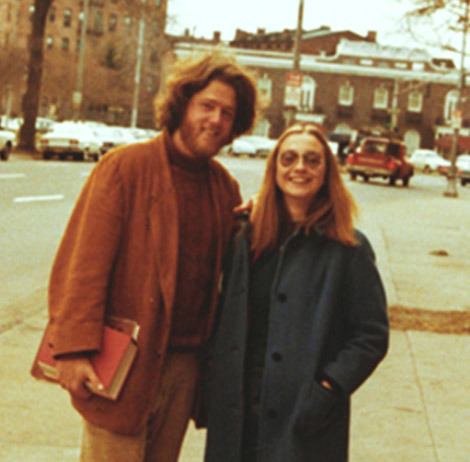
I have a crush on 1970s Bill and Hillary.


An under-read respected journal in which you were published:

Your great 6,000 word story that was finally published in print (pgs. 22-29, Issue No 17, Vol. IV) by a respected journal which nobody read. Well, god damn it, these people are going to sit through this. Where there is lack of readership, there is also being stuck in a plastic folding-chair in a literary city somewhere between 7:00 and 9:00 p.m., that genius fuck-up-dinner-plans mound of time. Short of the fire alarm going off, these 15-17 people will come to understand exactly that horrible yet retrospectively sacred thing that happened in your childhood, through the haze of lightheadedness and needing to pee.
Jimmy Chen, You Are What You Read From, Link 


Do you recall education? I remember the swift way our interests became jobs that carved us into weird working shapes, not machines, totally human, just degraded to the point of blind roles and and dark alliances and revenge projects. It was my hope to understand how to support myself and others with ideas and sweat. But the system I endure has nothing to do with labour.
Erik Stinson, Link 

Happy Friday, I guess? 

Thursday, September 27, 2012

some short things

Here are some passages I liked from poems/short stories I've read recently.

From the collection Life is Precious and God and The Bible :

 "Every terrorist has a demand", Kelley Irmen

realize this: you are trapped anywhere you go and routine induces
anxiety but there is routine always
realize this: you will go somewhere new and the stimulus will give you a
few months of relief
realize this: relief has shown it has teeth because once relief recedes --
you are left where you began
I have no beginning because I just relay stories and prose never has a
true beginning
I have no center because I only relay events and situations (r)evolve --
they are not circles

From "1992", Elizabeth Taddonio

A week after my Monday night ballet classes started up, my CEO told me he was concerned that I was leaving so quickly at the end of the work day to get to my ballet and yoga classes. 8:30 to 5 gave off the wrong perception of my priorities. I cried and muttered about never wanting those things to be taken away from me. I told him the thought of having those classes taken away from me broke my heart. Then I promptly went into the bathroom and splashed my face with cold water. There were no paper towels and I put my face under the hand drier and thought, "This is a bigger moment than I want to admit."


From Jim Behrle's chapbook Succubus Blues :

From "Fugue State Bird"

But how does one coolly remove
The fascinating woman in the
Polka dot top from her long-
Time douchebag beau and still nail
The landing? I like girls
With boyfriends, nuns / I
Like dead girls like Zelda
Fitzgerald / I'm a big fan
Of the crazy and the really
Crazy / so why are relation-
Ships so hard to master?


From the June 2012 issue of Everyday Genius :

From "Pastoral Seasonale", Bryan Beck

Fall again, and all morning
was much too bright to even believe
in such a thing as sadism.

From "Dishonest", Stephanie Barber

Bill didn't snap, he just raised his eyebrows as if to say "well, that is something that you said." Not "something" like "well, that is really something," but "something" like "some thing." Like "you said something," all flat and evident and Icelandic.

From "Hopscotch", Lesley Yalen

Seventy-six across was Dixie Drink. Five letters were needed, fourth letter E. Makela thought not of Dixie nor of Drink. She thought of no words at all, only letters, swirling, hurtling, filling every empty space. She watched them combine and recombine, lay down in squares and peel off. The alphabet narrowed, hollowed, released, was math. To recollect but not remember, to associate but not feel: this was the crossword's light. A light to let go in. To let go of small k's that leapt in king and kite; to let go of people who, when approached, were not themselves. Now, she saw only letters, stripped of sound and use, micro sculptures made of circles, planes, and hooks. They floated around her and she slowly dismissed all but five, and then she laid those five down in their only order, a single line in a network of intersections, in a pattern with no other message than itself. In this way, Makela jot julep, and felt kissed.

From "Some General Instructions", Sampson Starkweather

taking a saltshaker into a tomato patch is never a bad idea,
do not underestimate the gravitas of sandwiches,
one should make a sandwich with great care and love and imagination
sure, you could say that of all things, but it's not true, you don't need much imagination
to take out the trash or love to do the dishes, sandwich-making is on a higher plain
similar to the holiness of jumping, science and experience cannot explain why, for no
apparent reason, humans will jump, however it appears to happen less as one grows
older, my advice is to make it a habit to jump every now and then, imagine what people
will think seeing an adult just jump, imagine the surprise and joy you can enact inside
people merely by a random jump, poetry does this, poetry is constantly jumping, which
is one reason those of us who love it, love it, and probably not one of the reasons
that those who don't love it, don't love it, people who don't love poetry jump less
than people who love poetry, and that's a fact

Thursday, September 6, 2012

New Blog

Welp, I think it's ready. My new film adaptation blog is at www.cinemadaptation.com. It's another blogspot blog, so if you're interested in the subject of lit-to-film (or comics-to-film, stage-to-film, etc) feel free to follow.

I was going to do a tumblr, but quickly realized it's just not set up for the kind of thing I want to do. It's set up for Ryan Gosling gifs and instagrammed pictures of farmers market vegetable stands. And that's fine. But I'll stick with something that's not neck-vein-burstingly frustrating.

But anyway.


Thursday, August 16, 2012

Internet Lovelies

 On 'what's wrong with Prometheus':
This is why doing allegory well is hard: Your story actually has to work at a second level without shattering the viewer’s suspension of disbelief on the first level. Throughout the movie, you get the sense that the authors have decided that if it works symbolically, it doesn’t need to make sense narratively.
Julian Sanchez, Link

There was a lot wrong with Prometheus. Unfortunately I've been collecting these quotes since June and my anti-Prometheus steam has run out. But basically, what Julian said. Symbolism is well and good, but if the narrative doesn't make sense then what are you even doing. (See also Monks Flying Spaceships, A Canticle for Leibowitz).

We are devolving into a nation of people who wear their lack of concern for fellow human beings as a badge of honor. Too many people are looking for ways to justify their disdain for others, and too many news organizations are fanning the flames of such discourse.
Commenter Helane Carswell, Link

There will always be non-readers, bad readers, lazy readers – there always were. Reading is a majority skill but a minority art. Yet nothing can replace the exact, complicated, subtle communion between absent author and entranced, present reader.
Julian Barnes, Link

From "Existentially-Fraught Takes On Classic Picture Books To Teach Your Kids The Meaningless Of Life Before The Internet Does":

Brown Bear, Brown Bear, You Are F-cked

Set in a dystopian future in which animals can access the internet, Brown Bear, Brown Bear, You Are F-cked tells the tale of Brown Bear, whose exorbitant internet usage gives way to his development of extremely niche tastes in music, film, literature, and food. Relating to other bears becomes increasingly difficult and tiring. He makes ‘internet bear friends’ who are moderately interested in the same kinds of media to compensate for the IRL friends he has alienated.
Brown Bear slowly gains more and more internet friendships with bears all over the globe until he stops speaking with IRL bears completely, adopts ‘freeganism,’ and relocates to a remote, sealed-off, wifi-accessible cave in Vermont, where he can comment on blogs, refresh his Facebook feed, and discover new music on Spotify uninterrupted. He slowly loses track of the days, weeks, and months, and then he dies, leaving behind his earthly possesions: several parody Twitter accounts portraying various other woodland animals and a Blogspot.
Karim Kazemi, Link

Hahhahhaahaha...oh I'm sad now.


From Italo Calvino's If on a Winter's Night a Traveler:

In the shop window you have promptly identified the cover with the title you were looking for. Following this visual trail, you have forced your way through the shop past the thick barricade of Books You Haven’t Read, which were frowning at you from the tables and shelves, trying to cow you. But you know you must never allow yourself to be awed, that among them there extend for acres and acres the Books You Needn’t Read, the Books Made For Purposes Other Than Reading, Books Read Even Before You Open Them Since They Belong To The Category Of Books Read Before Being Written. And thus you pass the outer girdle of ramparts, but then you are attacked by the infantry of the Books That If You Had More Than One Life You Would Certainly Also Read But Unfortunately Your Days Are Numbered. With a rapid maneuver you bypass them and move into the phalanxes of the Books You Mean To Read But There Are Others You Must Read First, the Books Too Expensive Now And You’ll Wait Till They’re Remaindered, the Books ditto When They Come Out In Paperback, Books You Can Borrow From Somebody, Books That Everybody’s Read So It’s As If You Had Read Them, Too. Eluding these assaults, you come up beneath the towers of the fortress, where other troops are holding out:
the Books You’ve Been Planning To Read For Ages,
the Books You’ve Been Hunting For Years Without Success,
the Books Dealing With Something You’re Working On At The Moment,
the Books You Want To Own So They’ll Be Handy Just In Case,
the Books You Could Put Aside Maybe To Read This Summer,
the Books You Need To Go With Other Books On Your Shelves,
the Books That Fill You With Sudden, Inexplicable Curiosity, Not Easily Justified.
(and so on.)
via Flavorwire, Link

I’m not going to have others deciding what I want to read. I mean that would be almost anti-literature. I couldn’t read something just to say I’ve read it. That would be like picking your college major because your parents want you to be like a landscape architect or something. I mean only about 20% or something of people even have a college degree. The entire point is to select your occupation, to attempt to create your destiny, and you’re just going to toss it away? You’re just going to abdicate free will? Fuck that. I’m not reading a damn thing for others. That would be death.
Sean Lovelace, Link

My mother doesn’t understand that there’s a Linksys WRT54G Router inside her home, grimly installed by my father at 5:00 a.m. one morning while she was still getting her beauty sleep in. She touches her iPad with tiny soft fingers, hitting “forward” in her email on all-things-annoying to this contributor and her only son. Now and then she gets kicked off the wi-fi network — however endearing the password named after her by my father, whose displays of love are limited in such I.T. manners — and, when I happen to be around one weekend, tells me to fix the internet. I explain to her that it’s either the router or Comcast, and that I can only help with the former. That the internet cannot be fixed, due to teens. “The internet,” she repeats.
Jimmy Chen, Link


Wednesday, August 15, 2012

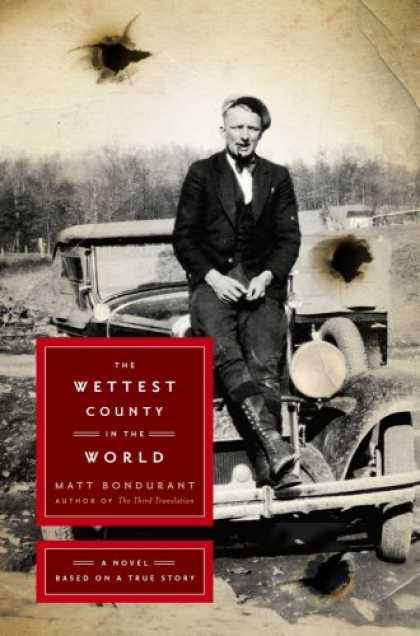
The Wettest County in the World

The Wettest County in the World, aka The Drastic Measures Southwest Virginians Will Take To Avoid Paying Taxes.

Matt Bondurant's novel, if you can't tell from the title, is all about moonshine and bootlegging during the Prohibition era in America. It follows two sets of narratives, that of the Bondurant brothers--the author's real life grandfather and granduncles--and Sherwood Anderson, the author researching the Great Franklin County Moonshine Conspiracy of 1935. The author used stories passed down through his family as well as newspaper articles and other research to piece together a story.

At several points Bondurant stresses the difficulty of getting people in rural communities to speak about bootlegging, through the trials of the novelist Anderson in the story, and in the epilogue describing his own experiences writing the novel. I identify completely. I grew up and still live in southwest Virginia, currently about 15 minutes away from where most of the events in the novel take place. I didn't discover my grandfather was a blockade runner during the Depression until after he passed away. It had never been discussed before, especially not by him. It was only told to me as an explanation for why my father has never touched alcohol in his life. Anything beyond that is taboo territory. But I can guess at the details.

The prose in the novel is very lyrical and beautiful, and really surprised me. I suppose I was expecting something more blunt and objective, à la Cormac McCarthy. The characters may be silent, rough mountain people, but Bondurant exposes their souls in a way that's really moving. The men in the story are three dimensional, so different from the stereotypes saturating most depictions of the region during that era. The narrative structure was not as impressive, being broken up into two different (but intersecting) story lines, and bouncing around to different points in time. Anderson's narrative, while interesting, takes away from tension of the Bondurant's story, and reveals several key plot points way too early. If you want to know whether the Bondurant boys live or get their revenge, all you have to do is read the first few chapters. Instead the major source of tension is set up as the outcome of the Moonshine Conspiracy trial, which I honestly couldn't care less about.

I mentioned earlier that the "men in the story" are three dimensional. I say that because unfortunately the women are not. I was willing to overlook it, being a book focused on the pursuits of three brothers, but a few passages are forcing my hand.

Take this one, from the mind of the author Sherwood Anderson:

Individuality will pass into the smoky realm of history. The day will come, Anderson knew, when we will all become soldiers in the army of the corporate age. When he was a boy there were no autos, planes, radios, chain stores, or great bloated trusts pushing their interests around the world. Men lived free lives then... He was only trying to say that when the world is mechanized something goes out of men, something elemental is lost. The female world, on the other hand, was ascendant: the world of possessions, the material world. The female is at home among these things. Men suffered for a lack of drive, starving for the tactile world.
Oh these poor manly men, losing their elemental spirit of manness. "Men lived free lives then." Please just bludgeon me to death with a Hemingway novel and let me rise into heaven (with all my diamonds and shoes apparently).

[small spoiler alert]
I understand what he's trying to say, but he managed to use all the wrong words in saying it. There are only a handful of female characters in the novel, one being Lucy, the wife of one of the brothers. She seems to exemplify the above statement, nagging her poor old husband for silly things like 'food' and 'shelter' for herself and infant child. Come on lady, get a job! What do you think this is, Depression era America? Another is Maggie, who is independent, has a job, and uses her earnings to dress nice. So of course she's raped. The only character-building tool writers can seem to come up with these days.
[end spoiler alert]

There was one female character I was extremely interested in, the real life Willie Carter Sharpe, one of the most notorious blockade runners of the era. She's the entire reason the author Sherwood Anderson is in Franklin County, and he obsesses over her profusely. There are rumors galore about her person: she has diamonds set in her teeth, she can drive faster than anyone around, drink more than the boys, etc. So what happens when Anderson finally sees her?

The experience was a disappointing one for most, including Anderson, who saw his hopes of a great mountain heroine die with her appearance on the witness stand... To Anderson she was jowly like a bulldog and crass of language and aspect. The overall impression was more like that of a gorilla in a dress.
That's it. The end. She's never mentioned again and the novel ends. My god if she isn't gorgeous and doesn't literally have diamonds set in her teeth like some hillbilly Flavor Flav, then who cares amirite?

What I'm trying to say is a I want to read a novel all about Willie Carter Sharpe. Diamond teeth or no. 

Enough with the bad. On to the good. Here are two passages I liked:

The last of the rain, in early April, gave way to the long waste of drought, blazing blue skies, cloudless, sparkling with dust. The early shoots withered in a matter of weeks, the bony cattle following the thin licks up the creek beds, planting their muzzles deep in any soft patch of mud. Fish crowded in the deep eddies and boys waded in to grab mud cats and carp with their hands. Headlights sweeping over a field at night found them alive with glowing eyes as packs of deer came down from the mountains desperate for water, parched and defiant. The old superstitions raised their hoary heads and traveling through stands of woods in Franklin County that summer you would occasionally find a snake hanging from a tree, nailed by the head, an ancient appeal to the wood gods to bring the rains back. Fields of yellow, stunted tobacco with untopped blooms covered the county. Red clay surged to the surface through the scattered weeds, the powder rising into the air on no wind at all, like transpiration, the dry sucking up the dry, and so a fine silt of clay was worn in every crease, in the eyes of dogs, in the skillets of fatback and pintos. A matter of minutes after you swept the floor clean you could draw in it with your finger. Men stood with their hands in their pockets, heads low, scuffing their boots, dreaming of sudden, angry cloudbursts. They knew when the tobacco died the shooting would begin.


It amazed Forrest that so many men seemed to wake up in the morning needing some kind of beating or another, men saying and doing fantastic things for the sake of getting another man to smash his face. Perhaps it was the aftermath, the burning humiliation of it they sought, when the aching morning came and they rolled over in the dirt and felt their mouth for teeth or lightly touched the split ear, the face in the rearview mirror swollen and crusted with blood. Forrest figured if these men wanted it he might as well give it to them.

Liked because it sounds exactly like something my dad would say.

If you're interested, in late August the film adaptation of the novel will be released, titled Lawless. I hope you are interested, because I read the novel for a reason. I've been planning for some time to start another blog, somewhere where I could combine my love of film and literature. So that's what I'll be doing, hopefully by the end of August when I see Lawless and Cosmopolis. I'll be reviewing movies that are adaptations of literature. And probably some other things too, like comics and maybe even video games (you guys know how good films based on video games are, right?).

 So that's why I've been a little slow in updating this blog. If you weren't aware there are also adaptations of Anna Karenina and Les Miz forthcoming, so yeah, I've been snailing my way through both of those bricks. Along with Barthes' Image Music Text, for some ideas on how I can write my reviews. Barthes as applied Resident Evil: Retribution. It could work.

So in the future look for news of a new blog, or admission of my failure and laziness.