
All that time and I still haven't written those reviews for books I read in December. It might be because I lost all the notes I took when reading them. Or it might be because someone gave me a copy of Dead Rising and I spent a hilarious amount of time getting the 'zombie genocider' achievement. Hooray! 20 imaginary points have been added to my imaginary videogame success tally. Let's all live in the internet.
I need to get on with my life so here's the world's laziest reviews of some really great books.
All of that Oscar Wilde stuff
(A House of Pomegranates, Lord Arthur Savile's Crime and Other Stories, The Happy Prince and Other Tales, and The Picture of Dorian Gray)
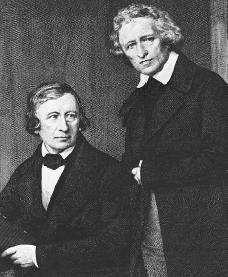
All but the last were collections of fairy tales written by Wilde. Most of the stories were incredibly sad. Remember the first time you read The Giving Tree? Well it's three books of that. But so good! The Brothers Grimm can suck it for writing such patronizing, moralistic stories to keep girls scared witless and locked inside bedrooms.
Okay, does that look like Matt Damon and Heath Ledger to you.
The Picture of Dorian Gray was Wilde's only novel. I wish he had written more. The basic plot of the novel revolves around a beautiful youth who is granted eternal youth, and in turn a magical portrait of himself ages instead. Dorian's sins and follies cause the portrait to age rapidly, giving him a visual representation of his own soul. It's an exploration of mortality and morality, and how each affects the other. In a way it reminded me of Drew Magary's Postmortal, where the introduction of immortality causes humanity to collapse into death, destruction and depravity. And after all that, the "immortals" don't get to live any longer than they would have normally as mortals.
Another thought: I've always been fascinated that stories always marry immortality with prosperity and hedonism. I guess, after all, if you were poor and lacked a lounge chair and a servant feeding you grapes, you might not want to live forever. But just once I want to see a hobo vampire. Instead they're all filthy rich and rolling around in velvet for no reason. Who's paying you!? Why is blood sucking a lucrative pursuit!?
Back on track...the preface to the novel, written by Wilde, is a wonderful meditation on art and meaning. Here it is:
The artist is the creator of beautiful things. To reveal art and conceal the artist is art's aim. The critic is he who can translate into another manner or a new material his impression of beautiful things.
The highest as the lowest form of criticism is a mode of autobiography. Those who find ugly meanings in beautiful things are corrupt without being charming. This is a fault.
Those who find beautiful meanings in beautiful things are the cultivated. For these there is hope. They are the elect to whom beautiful things mean only beauty.
There is no such thing as a moral or an immoral book. Books are well written, or badly written. That is all.
The nineteenth century dislike of realism is the rage of Caliban seeing his own face in a glass.
The nineteenth century dislike of romanticism is the rage of Caliban not seeing his own face in a glass. The moral life of man forms part of the subject-matter of the artist, but the morality of art consists in the perfect use of an imperfect medium. No artist desires to prove anything. Even things that are true can be proved. No artist has ethical sympathies. An ethical sympathy in an artist is an unpardonable mannerism of style. No artist is ever morbid. The artist can express everything. Thought and language are to the artist instruments of an art. Vice and virtue are to the artist materials for an art. From the point of view of form, the type of all the arts is the art of the musician. From the point of view of feeling, the actor's craft is the type. All art is at once surface and symbol. Those who go beneath the surface do so at their peril. Those who read the symbol do so at their peril. It is the spectator, and not life, that art really mirrors. Diversity of opinion about a work of art shows that the work is new, complex, and vital. When critics disagree, the artist is in accord with himself. We can forgive a man for making a useful thing as long as he does not admire it. The only excuse for making a useless thing is that one admires it intensely.
All art is quite useless.
You can now count Wilde as one of my favorite authors (there's a list somewhere).
Watchmen
Everything you've ever heard an enthusiastic nerd say about Alan Moore's masterpiece is absolutely true. Watchmen definitely lived up to the hype. And fun fact: I thought this would be a relatively breezy read, and could knock it out in just one bathtub session. It took me about a month to work through. It's not an all-night read. When you finish a chapter you have to sit back and think about it. Several days if needed. The structure is genius, weaving in journal entries, chapters from an imagined autobiography, snippets from a completely different comic (a comic within a comic! Inception!), among other things, right alongside the basic paneling and plot. There's nothing about this graphic novel that I would change. Being in the graphic novel format is the only way the story would succeed. I give credit to the filmmakers who attempted that adaptation a few years ago -- they did the best they possibly could have. But there's no way you could successfully translate between mediums here without missing the entire purpose.
On an imaginary list of the best novels I have ever read, this would be on it. Somewhere between Lolita and Wuthering Heights.
But don't take my word for it.


