Google+

Thursday, August 16, 2012

Internet Lovelies

 On 'what's wrong with Prometheus':
This is why doing allegory well is hard: Your story actually has to work at a second level without shattering the viewer’s suspension of disbelief on the first level. Throughout the movie, you get the sense that the authors have decided that if it works symbolically, it doesn’t need to make sense narratively.
Julian Sanchez, Link

There was a lot wrong with Prometheus. Unfortunately I've been collecting these quotes since June and my anti-Prometheus steam has run out. But basically, what Julian said. Symbolism is well and good, but if the narrative doesn't make sense then what are you even doing. (See also Monks Flying Spaceships, A Canticle for Leibowitz).

We are devolving into a nation of people who wear their lack of concern for fellow human beings as a badge of honor. Too many people are looking for ways to justify their disdain for others, and too many news organizations are fanning the flames of such discourse.
Commenter Helane Carswell, Link

There will always be non-readers, bad readers, lazy readers – there always were. Reading is a majority skill but a minority art. Yet nothing can replace the exact, complicated, subtle communion between absent author and entranced, present reader.
Julian Barnes, Link

From "Existentially-Fraught Takes On Classic Picture Books To Teach Your Kids The Meaningless Of Life Before The Internet Does":

Brown Bear, Brown Bear, You Are F-cked

Set in a dystopian future in which animals can access the internet, Brown Bear, Brown Bear, You Are F-cked tells the tale of Brown Bear, whose exorbitant internet usage gives way to his development of extremely niche tastes in music, film, literature, and food. Relating to other bears becomes increasingly difficult and tiring. He makes ‘internet bear friends’ who are moderately interested in the same kinds of media to compensate for the IRL friends he has alienated.
Brown Bear slowly gains more and more internet friendships with bears all over the globe until he stops speaking with IRL bears completely, adopts ‘freeganism,’ and relocates to a remote, sealed-off, wifi-accessible cave in Vermont, where he can comment on blogs, refresh his Facebook feed, and discover new music on Spotify uninterrupted. He slowly loses track of the days, weeks, and months, and then he dies, leaving behind his earthly possesions: several parody Twitter accounts portraying various other woodland animals and a Blogspot.
Karim Kazemi, Link

Hahhahhaahaha...oh I'm sad now.


From Italo Calvino's If on a Winter's Night a Traveler:

In the shop window you have promptly identified the cover with the title you were looking for. Following this visual trail, you have forced your way through the shop past the thick barricade of Books You Haven’t Read, which were frowning at you from the tables and shelves, trying to cow you. But you know you must never allow yourself to be awed, that among them there extend for acres and acres the Books You Needn’t Read, the Books Made For Purposes Other Than Reading, Books Read Even Before You Open Them Since They Belong To The Category Of Books Read Before Being Written. And thus you pass the outer girdle of ramparts, but then you are attacked by the infantry of the Books That If You Had More Than One Life You Would Certainly Also Read But Unfortunately Your Days Are Numbered. With a rapid maneuver you bypass them and move into the phalanxes of the Books You Mean To Read But There Are Others You Must Read First, the Books Too Expensive Now And You’ll Wait Till They’re Remaindered, the Books ditto When They Come Out In Paperback, Books You Can Borrow From Somebody, Books That Everybody’s Read So It’s As If You Had Read Them, Too. Eluding these assaults, you come up beneath the towers of the fortress, where other troops are holding out:
the Books You’ve Been Planning To Read For Ages,
the Books You’ve Been Hunting For Years Without Success,
the Books Dealing With Something You’re Working On At The Moment,
the Books You Want To Own So They’ll Be Handy Just In Case,
the Books You Could Put Aside Maybe To Read This Summer,
the Books You Need To Go With Other Books On Your Shelves,
the Books That Fill You With Sudden, Inexplicable Curiosity, Not Easily Justified.
(and so on.)
via Flavorwire, Link

I’m not going to have others deciding what I want to read. I mean that would be almost anti-literature. I couldn’t read something just to say I’ve read it. That would be like picking your college major because your parents want you to be like a landscape architect or something. I mean only about 20% or something of people even have a college degree. The entire point is to select your occupation, to attempt to create your destiny, and you’re just going to toss it away? You’re just going to abdicate free will? Fuck that. I’m not reading a damn thing for others. That would be death.
Sean Lovelace, Link

My mother doesn’t understand that there’s a Linksys WRT54G Router inside her home, grimly installed by my father at 5:00 a.m. one morning while she was still getting her beauty sleep in. She touches her iPad with tiny soft fingers, hitting “forward” in her email on all-things-annoying to this contributor and her only son. Now and then she gets kicked off the wi-fi network — however endearing the password named after her by my father, whose displays of love are limited in such I.T. manners — and, when I happen to be around one weekend, tells me to fix the internet. I explain to her that it’s either the router or Comcast, and that I can only help with the former. That the internet cannot be fixed, due to teens. “The internet,” she repeats.
Jimmy Chen, Link


Wednesday, August 15, 2012

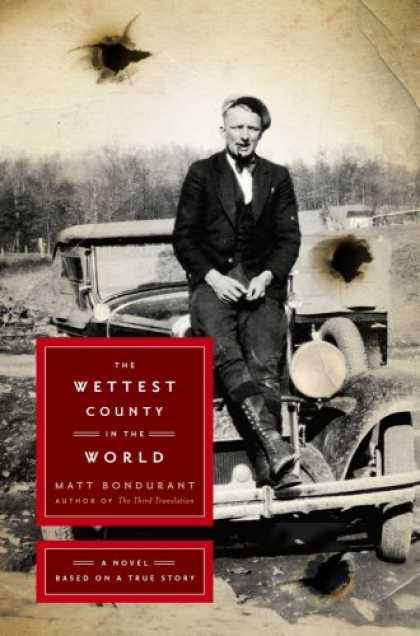
The Wettest County in the World

The Wettest County in the World, aka The Drastic Measures Southwest Virginians Will Take To Avoid Paying Taxes.

Matt Bondurant's novel, if you can't tell from the title, is all about moonshine and bootlegging during the Prohibition era in America. It follows two sets of narratives, that of the Bondurant brothers--the author's real life grandfather and granduncles--and Sherwood Anderson, the author researching the Great Franklin County Moonshine Conspiracy of 1935. The author used stories passed down through his family as well as newspaper articles and other research to piece together a story.

At several points Bondurant stresses the difficulty of getting people in rural communities to speak about bootlegging, through the trials of the novelist Anderson in the story, and in the epilogue describing his own experiences writing the novel. I identify completely. I grew up and still live in southwest Virginia, currently about 15 minutes away from where most of the events in the novel take place. I didn't discover my grandfather was a blockade runner during the Depression until after he passed away. It had never been discussed before, especially not by him. It was only told to me as an explanation for why my father has never touched alcohol in his life. Anything beyond that is taboo territory. But I can guess at the details.

The prose in the novel is very lyrical and beautiful, and really surprised me. I suppose I was expecting something more blunt and objective, à la Cormac McCarthy. The characters may be silent, rough mountain people, but Bondurant exposes their souls in a way that's really moving. The men in the story are three dimensional, so different from the stereotypes saturating most depictions of the region during that era. The narrative structure was not as impressive, being broken up into two different (but intersecting) story lines, and bouncing around to different points in time. Anderson's narrative, while interesting, takes away from tension of the Bondurant's story, and reveals several key plot points way too early. If you want to know whether the Bondurant boys live or get their revenge, all you have to do is read the first few chapters. Instead the major source of tension is set up as the outcome of the Moonshine Conspiracy trial, which I honestly couldn't care less about.

I mentioned earlier that the "men in the story" are three dimensional. I say that because unfortunately the women are not. I was willing to overlook it, being a book focused on the pursuits of three brothers, but a few passages are forcing my hand.

Take this one, from the mind of the author Sherwood Anderson:

Individuality will pass into the smoky realm of history. The day will come, Anderson knew, when we will all become soldiers in the army of the corporate age. When he was a boy there were no autos, planes, radios, chain stores, or great bloated trusts pushing their interests around the world. Men lived free lives then... He was only trying to say that when the world is mechanized something goes out of men, something elemental is lost. The female world, on the other hand, was ascendant: the world of possessions, the material world. The female is at home among these things. Men suffered for a lack of drive, starving for the tactile world.
Oh these poor manly men, losing their elemental spirit of manness. "Men lived free lives then." Please just bludgeon me to death with a Hemingway novel and let me rise into heaven (with all my diamonds and shoes apparently).

[small spoiler alert]
I understand what he's trying to say, but he managed to use all the wrong words in saying it. There are only a handful of female characters in the novel, one being Lucy, the wife of one of the brothers. She seems to exemplify the above statement, nagging her poor old husband for silly things like 'food' and 'shelter' for herself and infant child. Come on lady, get a job! What do you think this is, Depression era America? Another is Maggie, who is independent, has a job, and uses her earnings to dress nice. So of course she's raped. The only character-building tool writers can seem to come up with these days.
[end spoiler alert]

There was one female character I was extremely interested in, the real life Willie Carter Sharpe, one of the most notorious blockade runners of the era. She's the entire reason the author Sherwood Anderson is in Franklin County, and he obsesses over her profusely. There are rumors galore about her person: she has diamonds set in her teeth, she can drive faster than anyone around, drink more than the boys, etc. So what happens when Anderson finally sees her?

The experience was a disappointing one for most, including Anderson, who saw his hopes of a great mountain heroine die with her appearance on the witness stand... To Anderson she was jowly like a bulldog and crass of language and aspect. The overall impression was more like that of a gorilla in a dress.
That's it. The end. She's never mentioned again and the novel ends. My god if she isn't gorgeous and doesn't literally have diamonds set in her teeth like some hillbilly Flavor Flav, then who cares amirite?

What I'm trying to say is a I want to read a novel all about Willie Carter Sharpe. Diamond teeth or no. 

Enough with the bad. On to the good. Here are two passages I liked:

The last of the rain, in early April, gave way to the long waste of drought, blazing blue skies, cloudless, sparkling with dust. The early shoots withered in a matter of weeks, the bony cattle following the thin licks up the creek beds, planting their muzzles deep in any soft patch of mud. Fish crowded in the deep eddies and boys waded in to grab mud cats and carp with their hands. Headlights sweeping over a field at night found them alive with glowing eyes as packs of deer came down from the mountains desperate for water, parched and defiant. The old superstitions raised their hoary heads and traveling through stands of woods in Franklin County that summer you would occasionally find a snake hanging from a tree, nailed by the head, an ancient appeal to the wood gods to bring the rains back. Fields of yellow, stunted tobacco with untopped blooms covered the county. Red clay surged to the surface through the scattered weeds, the powder rising into the air on no wind at all, like transpiration, the dry sucking up the dry, and so a fine silt of clay was worn in every crease, in the eyes of dogs, in the skillets of fatback and pintos. A matter of minutes after you swept the floor clean you could draw in it with your finger. Men stood with their hands in their pockets, heads low, scuffing their boots, dreaming of sudden, angry cloudbursts. They knew when the tobacco died the shooting would begin.


It amazed Forrest that so many men seemed to wake up in the morning needing some kind of beating or another, men saying and doing fantastic things for the sake of getting another man to smash his face. Perhaps it was the aftermath, the burning humiliation of it they sought, when the aching morning came and they rolled over in the dirt and felt their mouth for teeth or lightly touched the split ear, the face in the rearview mirror swollen and crusted with blood. Forrest figured if these men wanted it he might as well give it to them.

Liked because it sounds exactly like something my dad would say.

If you're interested, in late August the film adaptation of the novel will be released, titled Lawless. I hope you are interested, because I read the novel for a reason. I've been planning for some time to start another blog, somewhere where I could combine my love of film and literature. So that's what I'll be doing, hopefully by the end of August when I see Lawless and Cosmopolis. I'll be reviewing movies that are adaptations of literature. And probably some other things too, like comics and maybe even video games (you guys know how good films based on video games are, right?).

 So that's why I've been a little slow in updating this blog. If you weren't aware there are also adaptations of Anna Karenina and Les Miz forthcoming, so yeah, I've been snailing my way through both of those bricks. Along with Barthes' Image Music Text, for some ideas on how I can write my reviews. Barthes as applied Resident Evil: Retribution. It could work.

So in the future look for news of a new blog, or admission of my failure and laziness.

Friday, July 6, 2012

The Year of the Flood

It's 2012, so it seems reasonable there should be a little bit of apocalypse going on. My sympathies to everyone affected by the storms in the mid-Atlantic who've had to go without power recently. I was lucky and didn't lose mine. But I have been hiding in the bathroom with my cat a lot recently.

So between the crazy heat, the storms, being 6 months away from a pre-Christmas apocalypse, and seeing Seeking a Friend for the End of the World (which was really good and may have made me openly sob in public), reading The Year of the Flood felt right in stride.

The Year of the Flood is Margaret Atwood's follow up to her 2003 dystopian novel Oryx and Crake, which I read about two years ago. The structure of both novels is very similar and they occupy the same timeframe. At the beginning we're introduced to the world after a mysterious epidemic has eradicated the majority of human life. Through flashbacks we find out what exactly happened. It's a tricky structure to pull off, since the reader already knows the end result, and the tension could easily have been lost. However Atwood lets just the right amount of information remain mysterious to make it a page turner.

In Atwood's dystopian vision, the future world is owned and controlled by corporations, predictably corrupt and money-seeking. Humans live either in gigantic walled communities owned by the corporations, "compounds," or outside in the ghetto-esque "pleeblands." Pharmaceuticals and biotechnology are the biggest focus of the corporations (Resident Evil, anyone?), and through experiments in genetic mutation some truly horrifying monsters have been created. Not in the name of warfare as you might think, but in the goal of feeding and sustaining an ever-growing human population. In Oryx and Crake we're introduced to 'pigoons,' pigs bred to grow extra organs so they can be harvested and transplanted into humans. Or even more terrifying, 'ChickieNobs', chickens bred without heads which grow harvestable chicken parts. Imagine a featherless raw chicken growing a ridge of nuggets down its back.

In Oryx and Crake we follow the story of one of the compounders and his experiences before and after the apocalyptic event. In The Year of the Flood we journey to the other side of the fence, following two women and their experiences in the pleeblands, as well as a few anti-corporate movements. One of these is called 'God's Gardeners,' a group dedicated to living in harmony with nature. It's a slightly satirical take on cults and religious groups such as the Amish -- if the Amish were vegan. After reading about ChickieNobs, veganism is looking ever more appealing.

One of my few criticisms of the novel is Atwood's insistence on making all the characters, and all the stories, reference each other incessantly. There were far too many coincidences for it to remain believable. I can believe in lab-created hybrid animal species (lion + lamb = 'liobam'), but not that one of the main characters is going to keep running into her ex-boyfriend every other page -- especially not after the world has ended. Oh hey there's probably only a dozen people left in the world and guess what, one just happens to be your ex! Ack! (I just gave someone in Hollywood an idea, didn't I).

The Year of the Flood ending seemed pretty unfinished, which tells me she'll most likely be writing a third follow-up (just checked, and yup). I'm not sure if I'll read it. There's nothing very fascinating or redeemable about this future world. It's mostly just repulsive and sad. I'm sure in the third book the characters will work to build a new world, and there will be corruption, and people will make the same mistakes again. New genetic hybrids will be introduced that have stupid names I'll have to remember. I think Atwood took some inspiration from Dr. Seuss when she came up with 'rakunk' (raccoon + skunk, obviously).

Not many quotables, but here are two passages I liked:

As with all knowledge, once you knew it, you couldn't imagine how it was that you hadn't known it before. Like stage magic, knowledge before you knew it took place before your very eyes, but you were looking elsewhere.

Glenn used to say the reason you can't really imagine yourself being dead was that as soon as you say, "I'll be dead," you've said the word I, and so you're still alive inside the sentence. And that's how people got the idea of the immortality of the soul -- it was a consequence of grammar. And so was God, because as soon as there's a past tense, there has to be a past before the past, and you keep going back in time until you get to I don't know, and that's what God is. It's what you don't know--the dark, the hidden, the underside of the visible, and all because we have grammar

That...actually makes a lot of sense. In a roundabout way. What came first -- worship of the unknown, or language?

Friday, June 1, 2012

Internet Lovelies

Happy Friday!

It’s one of those books. Kerouac, Salinger, Vonnegut maybe, even that one where the private school guy pushes the other private school guy off a tree, etc. Essential, right? There’s an age window for these things, 17-23 maybe, or you know. Miss that window it’s like the space shuttle (we used to have a space program with actual shuttles, kids) and reentry vectors. Go now! You read the book, it slides into your musty quiver, you go past it onto other things. It’s not disregarded, it’s just done. To read the book at my age is a bit like the grown man wearing a football jersey in public. You know, “that guy.”

Sean Lovelace reading Tom Wolfe, Link


I feel like I've missed my window of opportunity to read The Catcher in the Rye. Because that's a thing I haven't done. There are so many pieces of "essential" literature I missed out on because my high school's English program was ridiculous. We read Oedipus Rex five times before I graduated. Yeah, that definitely wouldn't scar anyone for life.

But in regard to the above quote, I always feel I'm being judged when I pick up anything by the Brontes or Austen. Or when I admit Jane Eyre is still, after 16 years, my favorite novel. Like that's something only a ninth grader would say. Oh well. Come at me, haters!


In a very deep sense, you don’t have a self unless you have a secret, and we all have moments throughout our lives when we feel we’re losing ourselves in our social group, or work or marriage, and it feels good to grab for a secret, or some subterfuge, to reassert our identity as somebody apart.
Dr. Daniel M. Wegner, Link

And that's what anonymous internet identities are for.


So. The world hates you. You are considered the worst thing to be compared to. Throw like a girl. Talk like a girl. Cry like a girl. God forbid we ever be girls.

No, we wouldn’t want to take utter delight in beauty and love. We wouldn’t want to carefully watch and study something to learn. We wouldn’t want to look at the world and for just one second think that we have as many opportunities as boys. That we can play sports. Play the drums or saxophone. Play video games. Excel at science/math. And for that second, before something or someone starts opening their shit-hole to put down little girls, we can fly.

So what can we do, dear daughter? When you get a little older, I will be honest with you and tell you – fuck ‘em. You will not change their mind by arguing, by telling them they are wrong. You change their mind by showing them how being a girl is awesome. You show them by not hiding, by not being demure.

You show them by being more than your looks, even if that’s all people comment on. You show them by your independence. You show them by being more than they expect to see. You show them by not taking their shit.
 Mur Lafferty, Link

You should click that link and read the entire essay. It's worth it.


A book of poems is a book, not a collection of poems. It accumulates, gathers into a FORCE or PUSHING or like if you threw the book at a wall, it would scratch there, but then imagine the INSIDES of the book, propelling, the concepts, the words, the forms and functions, like they would go through the drywall, or the fake rock, or out the other…expand like the copper mushroom around the lead, a bullet (compression forms) I mean, metaphorically, but if it HITS you as you read, moves synapses, rattles acetylcholine, is it metaphorical at all? What is it to MOVE?
Sean Lovelace, Link

It’s funny, as someone who’s on the receiving end of beatings that are justified by the Bible, how pansy-assed some people react when you push back.
Dan Savage, Link


Always hilarious/disturbing to see how the majority handles being "bullied" by minorities. If that's even possible. Fox News seems to think so. "War on Christmas" and all.


If no one savored and treasured and bought and sold and swapped and talked and argued about books in little cool energetic flavorful cheerful clean entertaining bookstores owned by the people who run them then we would starve for all sorts of lost books and stories and we would have only stories yelled at us from screens and stories sold to us by cold pollsters and that would be a reduction and dilution of the nation and species we are. If we did not have independent bookstores we would be even more herded prey to the most brilliant marketers among us than we are now and that would be a great shame.
Brian Doyle, Link

I think it's true. Which is why chick lit is EVIL, because it convinces women that they should be doing a job in marketing while living in a flat and obsessing about shoes and boyfriends.

While everyone in their right mind knows that a proper, self-respecting heroine should be running round the moors in a damp bonnet while demanding a relationship of utter equality with a gentleman.

Comment by UrsulaWJ on the NPR article "Can a Fictional Character Take You Over?", Link 


I have been thinking about that opening question for weeks — would I be the same person if I had been born male? — and can’t even really imagine it. It’s not just the male body, a body that, while I enjoy my proximity to one, I don’t really understand. It’s the impossible pressure to conform. It seems to me, from afar, that men must choose a subculture and mold themselves accordingly. They are not encouraged to drift between as women are. I’ve read enough gender theory to be able to parrot simple reductions like “femininity is a performance” whenever appropriate. But masculinity is a performance, too, and it seems like a much less fun performance.  
Jessa Crispin, Link
 
So basically DC are trying to go legit with characters that were created as a satirical pastiche of classic comicbook superheroes in the first place.
 Comment by Subterranean99 in regard to the Watchmen prequels, Link


Pretty much, yeah. Prequels are evil.Then again, Prometheus is looking pretty damn good. Fingers crossed. 


I won’t even go into all the girl sh-t that went down during my formative years; it pains me to remember it and if you’re looking for petty content, you can just turn on Bravo. I’ll simply say this: girls are the worst. They just are. I don’t care if that’s not a feminist thing to say, and I definitely don’t care if it’s a stereotype. I learned in middle school that when it comes to girls, you gotta find the good ones, stick to them like they are the air you breathe, protect them like they’re your first-born children, and never, ever let them believe they’re fat.
Sydney Nikols, Link


By discounting these books, the big chains and Amazon did to the independents what Walmart has done to mom-and-pop Main Street retailers: crush them by running a race to the bottom. But there was more collateral damage. In time, discounting also deprived American readers of the opportunity to read foreign authors of a high literary reputation because, in an aggressively commercial publishing environment, translations are often risky and expensive. In the words of a high-ranking CEO in New York, “I don’t publish manuscripts I cannot read.”
Michael Naumann, Link


Needing to kill time on my lunch break last week, I went into a Barnes & Noble for the first time in probably a year. I discovered I own more books of poetry than they do. There were several hardback copies of Hilary Mantel's new book, Bring up the Bodies, but none of Wolf Hall, its predecessor. I could feel the toppling displays of Fifty Shades of Grey stalking me throughout the store. A teen vampire hissed at me. I bought a The Strokes CD and left.


Thursday, May 31, 2012

Maphead

When I found out that Ken Jennings, the guy who in 2004 managed the longest winning streak ever on Jeopardy!, was active on twitter, I knew I had to follow him. Then I discovered just how good he is at it, and surprisingly hilarious. Then I found out he's an author, and recently wrote a book about being obsessed with maps, and my head nearly exploded.

Not really. But I'm a bit map-obsessed myself, and Jeopardy!-obsessed, so it was a match made in heaven.

I wasn't entirely sure what to expect with Jennings' Maphead. Starting off I thought maybe it would be a collection of "weird geography facts" -- the most remote inhabited island (Tristan da Cunha), the northernmost inhabited settlement (Alert, Nunavut), the capital of Burkina Faso, (Ouagadougou, you will forever be in my heart). But it turned out to be so much more.

Jennings manages to cover every aspect of map geekdom you could imagine -- map collecting, geocaching, savant geography, fictional maps, Google Earth -- you name it. Every chapter includes his own personal experiences, along with some really interesting interviews. He channels Sarah Vowell, albeit with less Rush Limbaugh bashing.

More than anything it's about cartophilia -- pure obsession with everything maps and geography. I'm not certain I could legitimately call myself a maphead, but I do spend upwards of 2-3 hours every week zooming in to every nook and cranny of Google Earth and Maps. And I did have a Middle Earth poster hanging in my dorm (right next to a katana-wielding Uma Thurman). As a fifth-grader I won our elementary school's branch of the National Geographic Bee, to the delight of my 9 year old self. My prize was an inflatable globe and all was right with the world. Later I joined the high school's social studies Academic Competition Conference team (M.A.C.C. shoutout!), then later the Scholastic Bowl to further satisfy my trivia lust. Sure I answered some boring questions about William Henry Harrison, but really I did it so I could memorize river names in China and the heights of North American mountains.

It was neat to read about other people who love maps as much as I do. People who spent more time studying the two-page fold at the front of every world history book than inside its pages. Maps are mesmerizing and universal. Their visual language can be fundamentally understood by nearly everyone on the planet, even for those stubborn individuals who claim they're "bad at maps." And perhaps paper maps are falling by the wayside in the digital age. That doesn't mean the idea of maps themselves is going extinct. If anything, I feel the advent of GPS and digital maps are sparking a renaissance in geographic awareness.

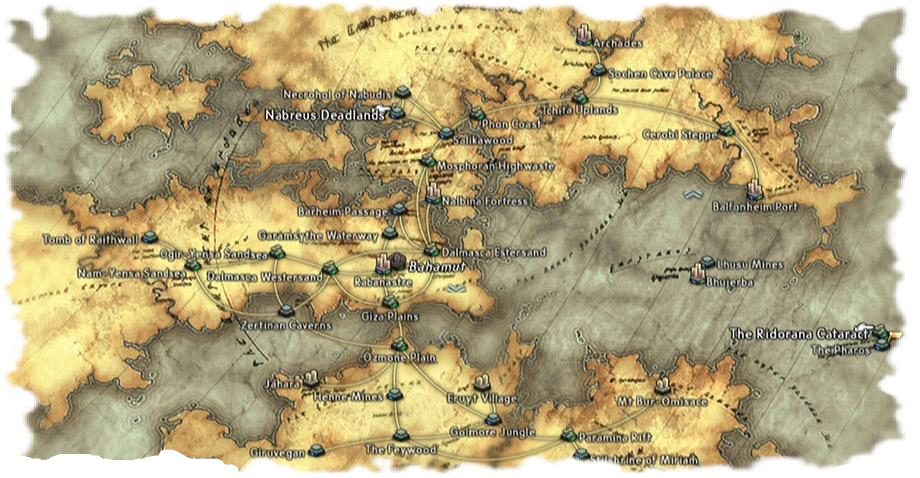
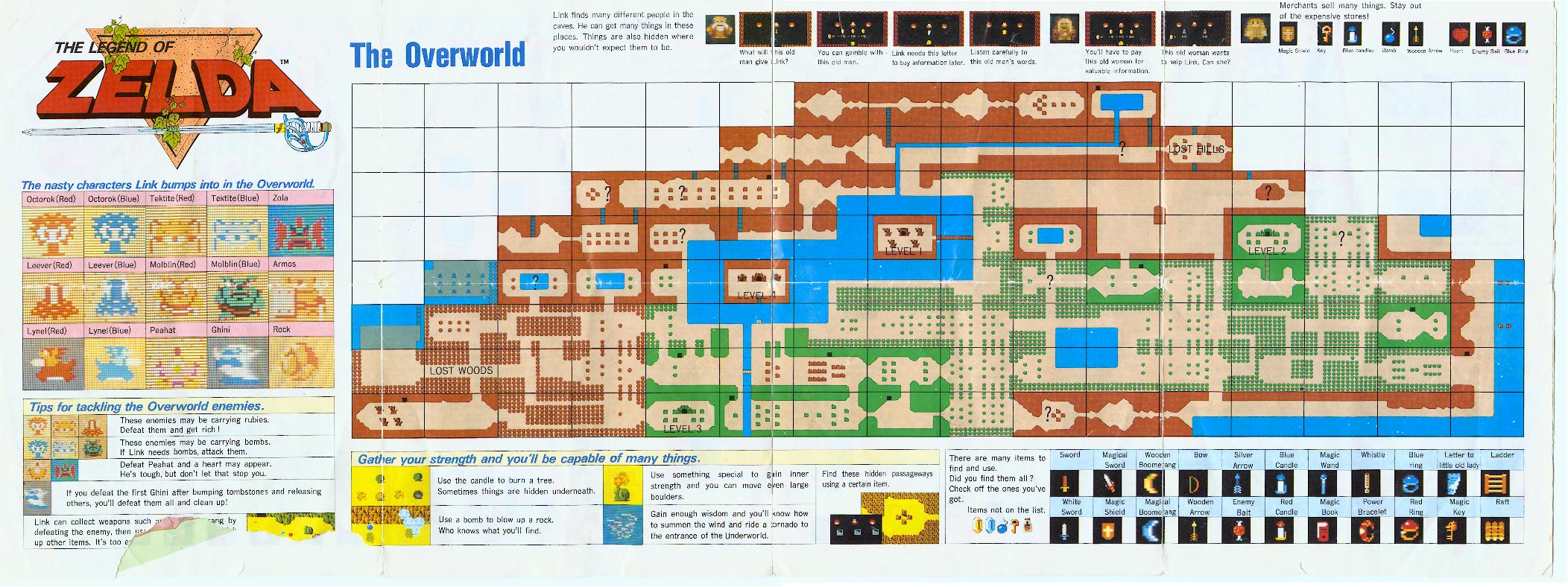
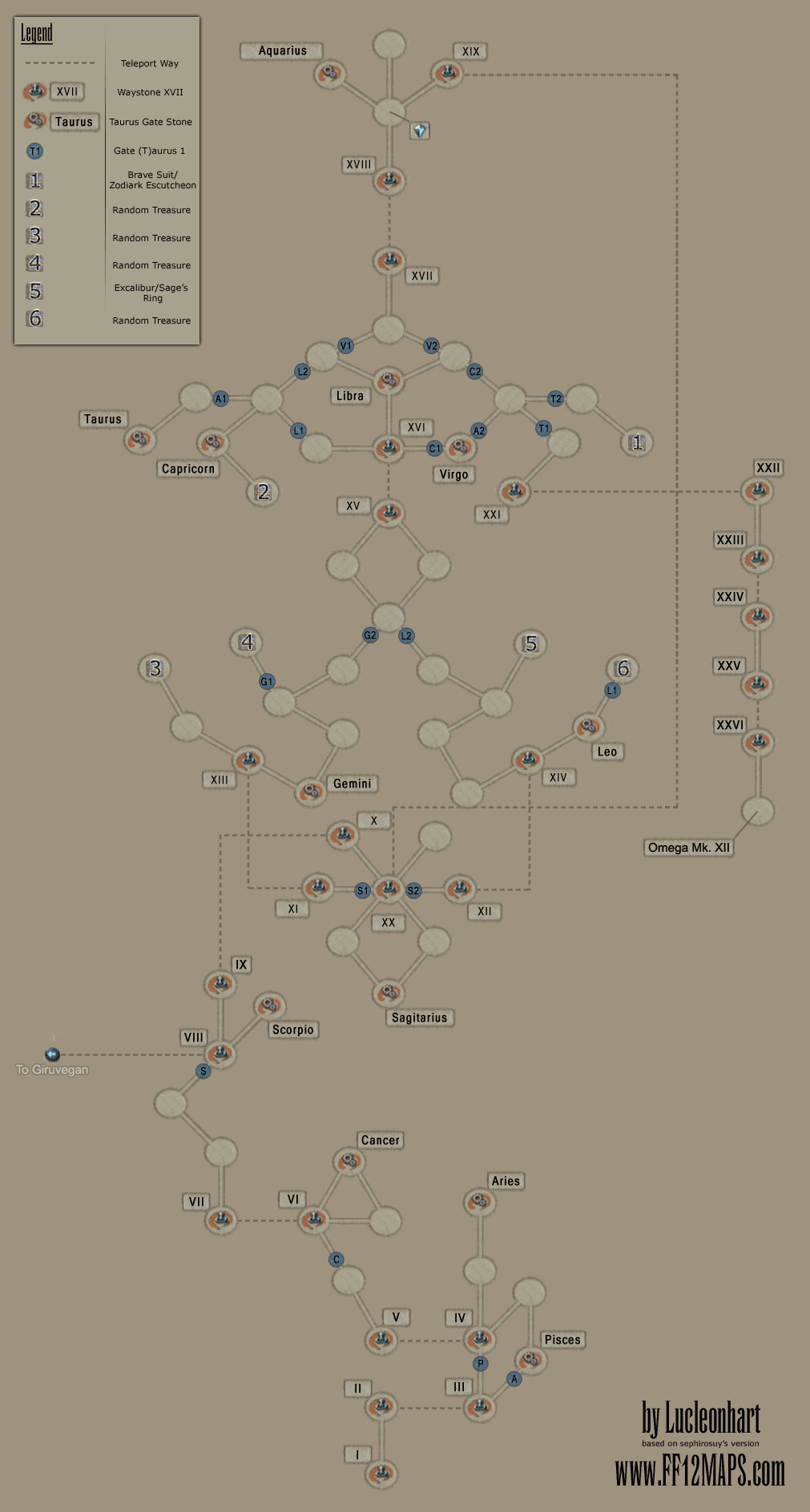
The one area I feel Jennings could have touched on but didn't is the vast use of maps in video gaming. It's a pretty recent medium, but widely popular, and I thought it deserved a few paragraphs in his chapter on fictional maps. Try playing a modern video game without a map. There aren't too many out there. Even the classic Legend of Zelda had a sprawling map that helped you keep clear of the Lost Woods. And some are workshops in map making itself. Try to take 5 steps in the Great Crystal in FFXII without getting lost -- it's nearly impossible. No map is provided, so players have to break out a pen and paper (or google, if you're lazy) if they want to find Ultima. Resident Evil, Doom, Grand Theft Auto, Silent Hill, Dead Rising,...Super Mario Bros 3. Maps, maps, and maps. Or take a game like Borderlands which uses maps in combination with a GPS-esque positioning and compass system. GPS has only been around since 1993, but video games have been representing your person on a map via moving triangle since at least 1992, when Doom was being developed. I'm sure it was used even earlier. And like Al Franken, who can draw a near-perfect map of the U.S. from memory, gamers memorize their landscapes as well, as seen on Mapstalgia, a tumblr dedicated to drawing video game maps from memory.


Oh FFXII's Ivalice, you're the best place ever that doesn't actually exist 

Speaking of video games, Maphead introduced me to a new hobby: a video game played in real life called geocaching. Geocaching is the act of hunting hidden caches around the world using a GPS device. You're given the coordinates of a cache's location, or sometimes a puzzle you solve to get these coordinates, and you travel to that location to find a container. Usually the container just holds a log sheet and a few trinkets. There's no material reward for your adventure, just the thrill of the find and a chance to visit somewhere new. Geocaching.com is the most popular site to find and log your geocaching adventures. I put in Roanoke's address and found there are hundreds of them in my area. One location I can actually see from my apartment window. I don't have a GPS enabled device, but given the clues listed on the website I tried to find it the other day. No luck, but I'm still hooked. Looks like I'll be saving up $80 so I can go treasure hunting.

I've blabbered enough. Here are a few passages from the book:
...during FDR's "fireside chats," he often instructed his listeners to follow along with him at home on their world maps, as he described events in both theaters of World War II. Not so with today's far-off wars. Most of us could look at a map, but we probably won't. Instead, we'll just make decisions that are less and less informed--at the ballot box, sure, but in other ways too: investment decisions, consumer decisions, travel decisions. Some of us will take jobs in public policy or be elected to national office, and lives will start to hinge on the decisions we make.

"I can see Russia from my house!" (see also: "Uzbekibeki-bekibeki-stanstan")

 ...geography seems less relevant than ever in a world where nonstate actors--malleable entities like ethnicities, for example--are as powerful and important as the ones with governments and borders. Where on a map can you point to al-Qaeda? Or Google, or Wal-Mart? Everywhere and nowhere.

He never goes anywhere without shopping for a souvenir tie printed with a local map. Sometimes he comes up dry, though--he just got back from Chile, where there wasn't a single map tie to be found.
"That's weird," I respond. "I thought skinny ties were coming back!" Dead silence greets my attempt at South American geographic humor. I see now that the world's largest array of cartographic neck-wear is nothing to joke about.

Well, I laughed.

 The Northwest Passage and the South Pole had fallen by the time The Hobbit was released, and Hillary scaled Everest the same year Tolkien drew the maps for The Fellowship of the Ring. There were, effectively no blank spaces left on the map. Maps of the Arctic tundra of Darkest Africa didn't cut it for young adventurers anymore; they had to look elsewhere for new blank spaces to dream about. And so they found Middle-earth, Prydain, Cimmeria, Earthsea, Shannara.
I wonder aloud to Brandon and Isaac if fantasy readers crave immersion as a form of escape because they're dissatisfied in some way with real life. I guess I've wandered a little too close to suggesting that fantasy nerds are all hopeless misfits, and Brandon calls me on it. "Look, I love my life, and I love fantasy. I have no reason to escape my world, but I still like going someplace new. Do people who like to travel hate where they live? When you open a fantasy book and see a map filled with new places, it makes you want to go explore them."

It's human nature to want to explore. We are curious cats. But we can't all afford to traipse off to east Asia whenever we feel like it. What's the best way to explore when you're stuck in a suburb? Reading a book. Watching a movie. Creating a new landscape from your imagination. It's a way to satisfy that itch to explore, short of donning a safari hat and running off into the jungle. It has nothing to do with satisfaction/dissatisfaction with your real life.

Basically if you've ever read and enjoyed any piece of fiction ever, you have no right to judge fantasy readers or writers. They're just taking it to the next level. And that level includes dragons and trolls, damn it.

And it's not like fantasy maps are a new concept anyway. Here's a 1695 map showing the supposed location of the Garden of Eden. Or this 16th century map showing an awesome collection of sea monsters surrounding Scandinavia for some reason. I'm surprised Beowulf hadn't killed them all.

If you're a lover of fantasy maps, but bored with the plain ol' Euro-centric world map, take a look at this:


Don't tell me that that doesn't blow your mind, even just a little bit. Of course being a Mercator it still makes Russia look like King Kong, but it's a nice way to flip your perspective on the appearance of our world. Or what about this Antarctica-centric map? Things are starting to look a lot like Galbadia.
 
I do have one bone to pick with the author, and that is his discussion, and attitude, towards women and geography. When discussing the National Geographic Bee in the seventh chapter he notes the under-representation of girl competitors on stage:
My immediate assumption is that the root of the achievement gap is spatial ability. Tests on gender and navigation have found that women tend to navigate via landmarks...which ties in nicely with the evolutionary perspective: early men went out on hunting expeditions in all directions and always needed to be good at finding their way back to the cave, developing their "kinesic memory," while women forage for edibles closer to home, developing "object location memory."

A few paragraphs earlier he explains away the over-representation of Asian American competitors as due to the fact that "Indian American culture so values this kind of educational success." I'm calling bullshit. Claiming that women have poor spatial ability because of evolution, then turning around and saying the only reason there aren't more white boys on stage is because of "an elaborate farm system for Indian bee nerds" is irresponsible. The performance of both demographics have everything to do with societal factors. And Ken's blurb claiming half the human population is biologically inclined to be worse at something isn't helping things.

Now that that's out of the way, I have to say it took me forever to read this book. Not because it was burdensome or boring (quite the opposite!), but because I read all of it with Google open. Every obscure island mentioned, every strange border, every previously unknown term, I had to look up. And as with Wikipedia surfing, before you know it you're looking up flight costs for your hypothetical trip to Tiksi, Russia and two hours have passed.

So if you're like me and want to take a tour of every strange and obscure point on the planet, but can only afford the armchair variety, I'll save you some footwork (fingerwork? that sounds wrong) and post some links to peruse below. Some are mentioned in Maphead, others were found during my web-meandering.

Point Roberts, WA - peninsula tip hanging south from Canada, only considered to be part of the United States because it's below the 49th parallel.
Rockall - an extremely tiny uninhabited rock islet north of Britain.
Hashima Island - an uninhabited island off the coast of Japan once housing a coal mining facility from 1887-1974, now completely abandoned.
Bir Tawil - an 800 square mile terra nullius (no man's land) between Egypt and Sudan, unclaimed by any country.
Vulcan Point - a triple island -- an island on a lake on an island on a lake on an island -- in the Phillipines.
Yakushima Island - home to one of the oldest, untouched primeval forests in the world. Gorgeous.
Santa Cruz de Isolte - the most densely populated island on Earth.

Have fun, cartophiliacs.

Update: One more thing, in response to Ken's insistence on female map ineptitude -- in 2008 I managed to navigate Tokyo's metro system, having never used subway transportation before, only a rudimentary knowledge of the Japanese language, the inability to read kanji, and every single station map looking like this:


SUCK IT.

Friday, May 4, 2012

Free Comic Book Day!

Tomorrow, May 5th, is Free Comic Book Day! Just like last year, I have to work so I won't be able to participate. But I'll be seeing The Avengers that night, possibly the most comic bookiest film of all time, so I guess it evens out.

Here's a list of all the comic titles that will be given out for free. The point is to get you into an indie comic store so you can see what you're missing out on.

Once you get your freebie, what else should you check out? I don't really have any new suggestions other than what I recommended last year. Now we're in season nine of the Buffy comics, which have improved a lot since season eight. I'm on volume 9 of The Walking Dead comics, which finally went to such a dark place that I'm not sure how the TV show will handle it. But who knows. We are twisted individuals.

You could also check out the new re-issued Sailor Moon manga. But if you're serious, you're better off buying the somewhat rare first editions by Mixx; because despite the larger format and a few nice glossy pages, the new Kodansha releases have HORRIBLE translations. Like reading an English dub on paper. And there's no justification for that.

OR you could read the entire series online for free. I don't feel guilty at all for linking that, because buying the good translations could easily set you back several hundred dollars. I totally bought them for $10 a piece in high school though. Profit!

And Naoko Takeuchi's work is still easily my favorite illustrative artwork. Intricately detailed architecture and the flowiest damn hair you'll ever see. About a million examples below.


chooom indeed.

More, more, more, more, and more.

Other things to look for if you find yourself in a comic book store tomorrow and aren't particularly into comic books or Marvel/DC superheroes but you want to see what the fuss is about (and stuff):

Scott Pilgrim
anything by Daniel Clowes
Love and Rockets
Watchmen
Adventure Time

So find an indie comic store near you and take advantage of the freeness, Charlie Brown!


Wednesday, April 25, 2012

Blindness

Finished Blindness by José Saramago, just 448 pages out of the 5,300 page ebook The Collected Novels of José Saramago (which is still just $33 at Powells!). Frequently included on lists of "most disturbing novels," it was pretty disturbing, but not on the level of American Psycho. I'm wondering if anything will be disturbing to me after reading it. Everything else seems a little precious in comparison.

Blindness begins with a man suddenly going blind while driving his car. It's a white blindness, instead of dark, and we soon find it's contagious. Others find themselves going blind as well, and the government quarantines the afflicted together in a mental asylum to contain the 'disease.' Terrified of the sickness, no officials, nurses, or doctors volunteer to live amongst them. The asylum quickly becomes a living hell. Among the hundreds of the newly blind is only one who can see: a curse more than a blessing.

Reading this book will really make you want to shower. The detailed descriptions of filth and odor that permeates their surroundings is pretty nauseating. You can only imagine how quickly conditions would deteriorate when locked in a space with hundreds of people who can't find the bathroom. Or take a bath. I kept picturing the nightmare worlds of Silent Hill. But maybe that's just because I'm playing Silent Hill 2 at the moment. At least Pyramid Head isn't in the book.

What I appreciate most about Saramago's writing is his honesty about how people would react faced with this situation. He presents the worst and the best of humanity. If he had truly set out to write something unabashedly 'extreme' or disturbing, he would've stuck with just the worst. I'm not entirely convinced the government would treat its quarantined citizens in the way depicted here. Then again, Saramago left the location of the city unknown, so who knows how the governments of particular countries would truly react. We all know what happened to Raccoon City (I swear that's my last video game allusion).

The blindness is of course a metaphor, but I'm honestly too lazy to figure out for what. I'm sure it's something profound. It would take a re-read to figure out I think. There's one particular scene in a church where all of the statues and portraits of saints, including Jesus, have blindfolds places over their eyes. The author was practically screaming LOOK AT THIS! THIS MEANS SOMETHING! Big bold neon lights flashing METAPHOR ALERT! But my brain was set on Homer Simpson mode. Ugh, it's probably something like, we didn't truly see each other before and that's why everyone went blind? Something like that. Plus Jesus?

You should read it and figure it out for me. It's really an incredible novel, and deserves a better, more attentive reader than I.

Here are some passages I liked. Saramago's writing style is pretty unique, using very few periods and lots of run-on sentences. It takes a while to get used to (and to figure out who's talking), but ultimately makes for smooth reading.

We all have our moments of weakness, just as well that we are still capable of weeping, tears are often our salvation, there are times when we would die if we did not weep.

There being no witnesses, and if there were there is no evidence that they were summoned to the post-mortems to tell us what happened, it is understandable that someone should ask how it was possible to know that these things happened so and not in some other manner, the reply to be given is that all stories are like those about the creation of the universe, no one was there, no one witnessed anything, yet everyone knows what happened.

Words are like that, they deceive, they pile up, it seems they do not know where to go, and, suddenly, because of two or three or four that suddenly come out, simple in themselves, a personal pronoun, an adverb, a verb, an adjective, we have the excitement of seeing them coming irresistibly to the surface through the skin and the eyes and upsetting the composure of our feelings, sometimes the nerves that cannot bear it any longer, they put up with a great deal, they put up with everything, it was as if they were wearing armour, we might say.